bomonike
How to learn the Chinese (Simplified) Mandarin language
NOTE: Content here are my personal opinions, and not intended to represent any employer (past or present). “PROTIP:” here highlight information I haven’t seen elsewhere on the internet because it is hard-won, little-know but significant facts based on my personal research and experience.
VIDEO:
 ALPHABETICAL INDEX:
apps,
Art,
Battles,
City Names,
Conversations,
Compass Directions,
Dates Months, Numbers,
Colors 颜色 yánsè,
Countries,
Driving,
Dynastries History,
Elements 素 sù,
eSIM vs VPN,
Firewall,
Flights,
Foods,
Glossary,
History,
HSK_exam,
Idioms,
Jade,
Languages,
LearningStrategies,
Memonics,
Movies,
Norms,
Payments,
Personal possessions,
Pinyin Alphabet,
Provinces,
Seasons,
Smalltalk,
Street signs,
Tones,
Typing Chinese,
Vocabulary database
Why Chinese?
ALPHABETICAL INDEX:
apps,
Art,
Battles,
City Names,
Conversations,
Compass Directions,
Dates Months, Numbers,
Colors 颜色 yánsè,
Countries,
Driving,
Dynastries History,
Elements 素 sù,
eSIM vs VPN,
Firewall,
Flights,
Foods,
Glossary,
History,
HSK_exam,
Idioms,
Jade,
Languages,
LearningStrategies,
Memonics,
Movies,
Norms,
Payments,
Personal possessions,
Pinyin Alphabet,
Provinces,
Seasons,
Smalltalk,
Street signs,
Tones,
Typing Chinese,
Vocabulary database
Why Chinese?
Why Chinese?
Due to historical geographical limits to transportation back in the day, VIDEO: There are 300+ dialects of the Chinese language.
The Han people constitute more than 90% of the population of China. They call their language 汉语 Hànyǔ (in Pinyin). The government in China standardized to Mandarin or Pǔtōnghuà (普通话, ‘common speech’).
Mainland China uses simplified Mandarin.
Taiwan uses traditional Mandarin.
Together, Mandarin Chinese is the largest speech community in the world.
HSK & HSKK exams
Secondary students in China take the Gaokao exam to graduate. Subjects Science, Math, Chinese, English are taken on separate days for 90 to 150 minutes each. Different provinces have different versions.
The Chinese language proficiency of non-native speakers (wai guo ren) are evaluated by CLEC, the China-wide Center for Language Education and Cooperation, under the federal Ministry of Education, administers standardized HSK & HSKK exams that are the Chinese equivalent of the TOEFL or IELTS for English.
The literal translation of HSK (Hànyǔ Shuǐpíng Kǎoshì) is:
- 汉语 (Hànyǔ): “Han language” (i.e., Standard Chinese or Mandarin).
- 水平 (Shuǐpíng): “Level” or “proficiency.”
- 考试 (Kǎoshì): “Test” or “examination.”
A separate exam, the HSKK (Hanyu Shuiping Kaoshi Kouyu) , evaluates speaking ability using audio-recording equipment.
Some Chinese cities offer “Green Cards” (permanent residency) or talent visas to foreigners who hold high-level HSK certificates.
Employers ask for “HSK成绩单 (HSK chéngjìdān)”: your HSK score report. To graduate from a university in China, undergraduate students must achieve “Intermediate” proficiency at
- “HSK Level 4” even in programs taught in a foreign language (English)
- “HSK Level 5” in programs taught in Mandarin Simplified Chinese.
There’s a slang “HSK 0.5” for foreigners (lǎo wài = old outsider, yáng rén = ocean, wài guó rén = outside country person) who wing it without Chinese language proficiency.
Before 2022, version 2 of the exam had only 6 tiers. The current Version 3 2023/2024 has 9 tiers for alignment with the Common European Framework of Reference for Languages (CEFR), which has three stages:
Beginner stage (Levels 1–3) evaluates basic daily real-world communication:
- HSK 1: Can understand and use simple words and phrases. (Vocab: 300 words in v3, 500 in v2) https://github.com/ivankra/hsk30
- HSK 2: Can communicate in simple and routine tasks. (Vocab: 300~1,200 words)
- HSK 3: Can communicate in Chinese at a basic level in daily life, study, and work. (Vocab: 600~2,200 words)
Intermediate stage (Levels 4–6) evaluates the ability to interact with native speakers discussing a wide range of topics:
- HSK 4: Can speak Chinese relatively fluently. (Vocab: 1200~3,000 words)
- HSK 5: Can read Chinese newspapers/magazines and watch Chinese films. (Vocab: 2400~4,300 words)
- HSK 6: Can easily understand written and spoken information and express themselves fluently. (Vocab: ~5,400 words)
The maximum score is 300 for levels 1-6.
Advanced (HSK Levels 7–9) focuses on near-native proficiency, academic research, and professional work for master’s/PhD programs:
- HSK 7-9 are tested together in one single exam. Passing with varying scores dictates whether you get a Level 7, 8, or 9 certificate. It tests highly nuanced language, classical Chinese elements, and complex writing. (Vocab: 11,000+ words)
Core HSK written tests involve typing Pinyin on a computer QWERTY keyboard without the accent marks.
- HSK 1 and HSK 2: You listen to audio clips and read sentences, paragraphs, or passages, then answering multiple-choice questions. There is no handwriting section.
- HSK 3 and HSK 4: The “writing” section requires you to rearrange provided words into a correct sentence. You do not have to write characters from scratch.
- HSK 5 and HSK: You must write short essays. However, these exams are almost entirely computer-based now. You type your answers using pinyin, and you select the correct character from a drop-down menu. You never actually “write” the character. One can take a paper-based test, but graders only check for correct characters, vocabulary, and grammar. As long as the final character is legible and correct, they do not know—and do not care what order strokes (bi hua) are written.
In China, the HSK Level 4 fee is 750 RMB, Level 5 is 950 RMB for the core.
The HSK & HSKK can be taken several times a year, usually on weekends (often monthly or bi-monthly depending on the 考点 (kǎodiǎn): Test center), worldwide at authorized test centers in and outside China.
Applying for Chinese Government Scholarships (CSC) or Confucius Institute Scholarships (called Hanban) almost always requires a minimum HSK score.
Register at https://www.chinesetest.cn Some countries also have their own regional HSK websites managed by local Confucius Institutes or embassy branches.
The deadline for registration and payment is 10 days before the test date, which is 3 September 2026 for testing on 13 Septermber 2026.
REMEMBER: Reservations require a photo. Print the registration ticket and bring it with your passport to the test center.
Scores are typically available online about a month after taking the test, and the physical certificate is mailed shortly after. HSK certificates are valid for life.
Learning strategies
-
Install and use translation mobile apps that use your camera. Google Translate does not require clicking a button before translating. Baidu Translate. DeepL Translate app. Apple Translate. 9.99-per-month Reverso
$137/month Migaku enables you to learn important pictographs of street signs and directions. The Migaku app turns social content to flashcards for memorization.
-
Install apps that work within China’s “Great Firewall”.
Use websitepulse.com or chinafirewalltest.com or to see whether a specific websites are blocked to select cities in China (Russia, Turkey):
blocked .com category avail. gmail.com, proton.me, iCloud.com, outlook.com web email tuta.com, live.com, gmx.com, mail.qq.com, mail.163.com pinterest media storage cloudinary Discord discussions ali dingtalk.com, kookapp.cn, yy.com Facebook.com Social Media ByteDance’s TikTok.com & douyin.com, RedNote.com, GitHub.com, Bitbucket source versioning Codeberg.com, GitLab.com Google.com, yahoo.com, Qwant (EU) search Baidu (baidu.com), Bing (cn.bing.com) imdb.com movie info - Instagram.com Photo Sharing Xiaohongshu (RED), (xiaohongshu.com) maps.google Navigation Amap (Gaode) (amap.com), Baidu Maps (map.baidu.com), Apple Maps (uses local data) office.com productivity ??? Pinterest.com Image Sharing / Bookmarks - Reddit.com Q&A zhihu.com, tieba.baidu.com Slack coordination Bytedance feishu.cn Uber.com Ride Didi.com Telegram.com news WeChat (weixin.qq.com), DingTalk (dingtalk.com) Twitter/X news Sina Weibo (weibo.com), weixin.qq.com Douyin (douyin.com) Twitch.com videogames - YouTube.com Video Sharing Youku, bilibili.com, Tencent: v.qq.com WhatsApp Messaging WeChat (weixin.qq.com), QQ (im.qq.com) Walmart shop amazon Wikipedia.com Encyclopedia baike.baidu.com, CNKI (cnki.net – academic) maps.google.com maps amap.com hostinger hosting ??? -
Use a mobile app to translate what appears in your laptop browser. Microsoft Translator (works in China) Audio files (podcasts, lectures) Whisper + DeepL
- Settings
- Quit (program)
- 打开 Dǎkāi = open
- 文件 = file
- Close
- Save
- Edit
- Selection
- View
- Window
- Help
-
To translate two-way conversations real-time (hands-free):
Apple iPhones come with a visual translation feature built into the camera app.
-
If ear buds don’t give you ear pain, $398 Timekettle M4 Pro earbuds. It understands the context of entire sentences in 13 pairs of languages offline. But an internet connection helps with accuracy.
WARNING: Most translation earbuds have a 2-5 second delay and struggle with background noise or overlapping talk among speakers.
For two-way conversations, keep one earbud and give the other one to another person. The battery (rated “up to 6 hourse”) may not last long enough.
NOT RECOMMENDED: For real-time speech-to-text with translation during meetings, there are E-ink tablets: $499 8.5” AINote Air2, $649 10” iFLYTEK AINote with AI Write.
Tencent Meeting ???
-
Learn Pinyin to pronounce Chinese names for Personal possessions. When needed, refer to the list below. Learn to pronounce foods or point to my list. Home items.
If you are just starting out, focus on interactive pinyin charts first. They are great for learning the four tones that give Mandarin its distinctive sound. For example, the syllable “ma” can mean different things depending on whether you say it with a high, rising, dipping, or falling tone.
Cantonese has 6 tones.
Children in mainland China, before drawing stokes of traditional calligraphy glyphs (in a very specific sequence), first learn the Pinyin alphabet.
-
Before traveling, sign up for automated payments, install and use mobile eSIM and VPNs so you can view YouTube videos. The Hong Kong and Macau SAR (Special Administrative Regions (特别行政区) residents do have access to western internet and separate currency and passport. Macau is the only legal gambling in China.
-
Identify media (movies) that show Chinese glyphs and Pinyin plus the English. Reality shows and vlog bloggers have less stilted sound.
Songs of Teresa??
NOTE: To further language unification, the government in China requires subtitles on films.
-
For more natural, ultimately faster learning, avoid translating individual words to focus understanding whole sentences. Learn individual words in a cluster so you better grasp context.
-
Repeat actors’ dialog out loud to get your mouth used to the pace and pronounciation. You’ll also discover the norms, mores and idioms of Chinese culture. CityNames
The English-subtitled 40-episode family comedy drama TV series Go Ahead! (2020) on YouTube is used by the FREE ZeroToHero 15-hour/12 video lesson intro course by an English native speaker.
-
Record yourself mimicking the subtle tones of what performers say, then playback to compare.
- If you are from the US, practice converting metric to US imperial units of measure:
- between kilometers and miles,
- Multiply km/h by 0.6 to get mph. The standard highway speed limit is 120 km/h means 74.5 mph. On bullet trains, 300 km/h = 180 mph. 5 miles is exactly equal to 8 kilometers.
- Divide kilojoules by 4.184 to get calories.
-
So you can better appreciate visiting museums, learn the Dynasties so you can better understand the artwork and how historical stories interconnect.
Watch Mandarin-language movies for the stories behind history. Legends: Shénnóng (transparent belly) invented Chinese medicine.
-
VIDEO: Know the 10 most common radicals used to form 100 Chinese characters. They are Radicals with some resemblance to the object.
There are 214 radicals that make up most single Chinese characters in use today. Some radicals come in more than one variant.
Songs (listed by difficulty)
-
Synonyms and antoynms (opposites)
https://www.youtube.com/watch?v=yujUbIyw0j0&t=169s&pp=ugUHEgVlbi1VUw%3D%3D 19:21 The Strange Reason Chinese Doesn’t Borrow Words get 15%
-
QUESTION: AI Voice chat like Alexa?
- If you are looking to pass the HSK 1 exam, learn the 500 words asked by the HSK 1 v3 exam.
- Ximalaya - HSK 1 textbook audio - HSK 1 workbook audio.
- Soundcloud - HSK 1 textbook audio - HSK 1 workbook audio.
-
For the HSK 4 exam, learn the 1,000 words
-
Learn basic conversations.
- Practice spaced repetition for long-term recall. Install the Anki app and load flash card content and quizzes so you spend time on what you didn’t get right. It’s free.
On Coursera Peking University course “Chinese” by Yu Bin:
- HSK 1
- HSK 2
-
Textbook “HSK Standard Course:
- Hanyu Maggie (grammar deep dives)
-
Chinese Zero to Hero (HSK 6-9 prep)
- Use HelloChinese (Levels 1-3) for game-based basics learning.
- Use Anki or Hack Chinese every single day to memorize the specific HSK vocabulary list.
-
Use $120/year (7-day trial) Du Chinese to practice reading words in context as stories with audio.
- Use macOS app SuperTest (formerly HSK Online) provides a mock exam to practice the timing and exact format of the test. It’s repetitive, though. $15/mo or $20/mo MAX for AI essay correction.
Vocabulary database
Column Source
- hsk_level All set to 1
- sequence 1-500, matching official order
- simplified Simplified Mandarin characters
- pinyin Tone-marked Pinyin
- part_of_speech Normalized (Verb, Noun, Adjective, etc.)
- english CC-CEDICT definitions, with overrides for ~26 entries where CEDICT picked the wrong sense
- measure_word Curated classifiers only — blank where no measure word applies (no invented defaults)
- stroke_count Total strokes from Unicode Unihan kTotalStrokes data
- example_simplified Example sentence in simplified Chinese
- example_pinyin Pinyin for the example (via pypinyin)
- example_english English translation
HSK-based learning
- Chinese Zero to Hero HSK 4 course is a one-time $180 USD (30 Day Money Back Gurantee) for 600+ videos (on the popular Teacheable platform), all aligned with the official HSK framework. Taking you from complete beginner to a confident intermediate level speaker.
<a target=”_blank” https://www.youtube.com/watch?v=UOvmVE9JBIc&pp=0gcJCcQLAYcqIYzv”>10:41</a> New HSK 1 Course Workbook : Lesson 1 : 你好 (Hello) : Chinese Listening & Practice by Beginner Mandarin
https://www.amazon.com/dp/B09ZD12JR1/ Ling Ling’s Learn Chinese Vocabulary for Beginners: New HSK Level 1 Chinese Vocabulary Book (Free Audio) - Master 500 Words in Context (NEW HSK Vocabulary Series)
paperback: $30.99
https://www.youtube.com/watch?v=U_SAcVGFpag&
https://www.youtube.com/watch?v=Q09_xDZHWeE&pp=ugUEEgJlbg%3D%3D 10:55 Learning Mandarin Chinese in 2026 is Awesome, Actually. Yuena
Conversations
AI Conversation App:
-
Langua: http://languatalk.com/?via=brian
-
Find live conversation partners on https://italki.com.
Phone mobile eSIM vs VPN
To get a Chinese local services on the local China network to ensure glitch-free local food delivery with Chinese SMS, get a local phone number. Go to a China Unicom store with your passport. Plans may vary by store/city. VPN may be blocked.
https://www.youtube.com/watch?v=2nSD4NoykX0&pp=ugUEEgJlbg%3D%3D
Airalo ITCHYFEET20 & trip.com Activate after you land.
All communities in mainland China use the same toll-free standard emergency phone numbers. Be ready to give your exact address or cross streets. If you can’t speak Chinese, try to say the name of your hotel or use a landmark.
- 122 for non-injury traffic accidents or road disputes.
- 110 for Police (General) - crimes, theft, disturbances, or any urgent law enforcement need.
- 119 for Fire & Rescue or hazardous material incidents.
- 120 for medical ambulance - emergencies, injuries, or sudden illness.
- 12308 for foreign Affairs / Consular Hotline serving Chinese citizens abroad; Foreigners should contact their own embassy/consulate.
- 12110 for Text-only emergency SMS reporting (for deaf/hearing-impaired or when voice call is unsafe).
SAR (Special Administrative Regions) have their own:
- 999 – Unified emergency number (police, fire, ambulance).
| “mainland” China | +86 |
| Taiwan | +886 |
| Hong Kong SAR | +852 |
| Macao SAR | +853 |
- +86-10-8531-4000 for life-or-death emergencies involving a U.S. citizen (arrest, death, serious illness/injury)
- 5679-4700 US Visa Information Call Center. From US: 703-665-1986.
- https://www.ustraveldocs.com/cn
- immd.gov.hk
Payments & Currency
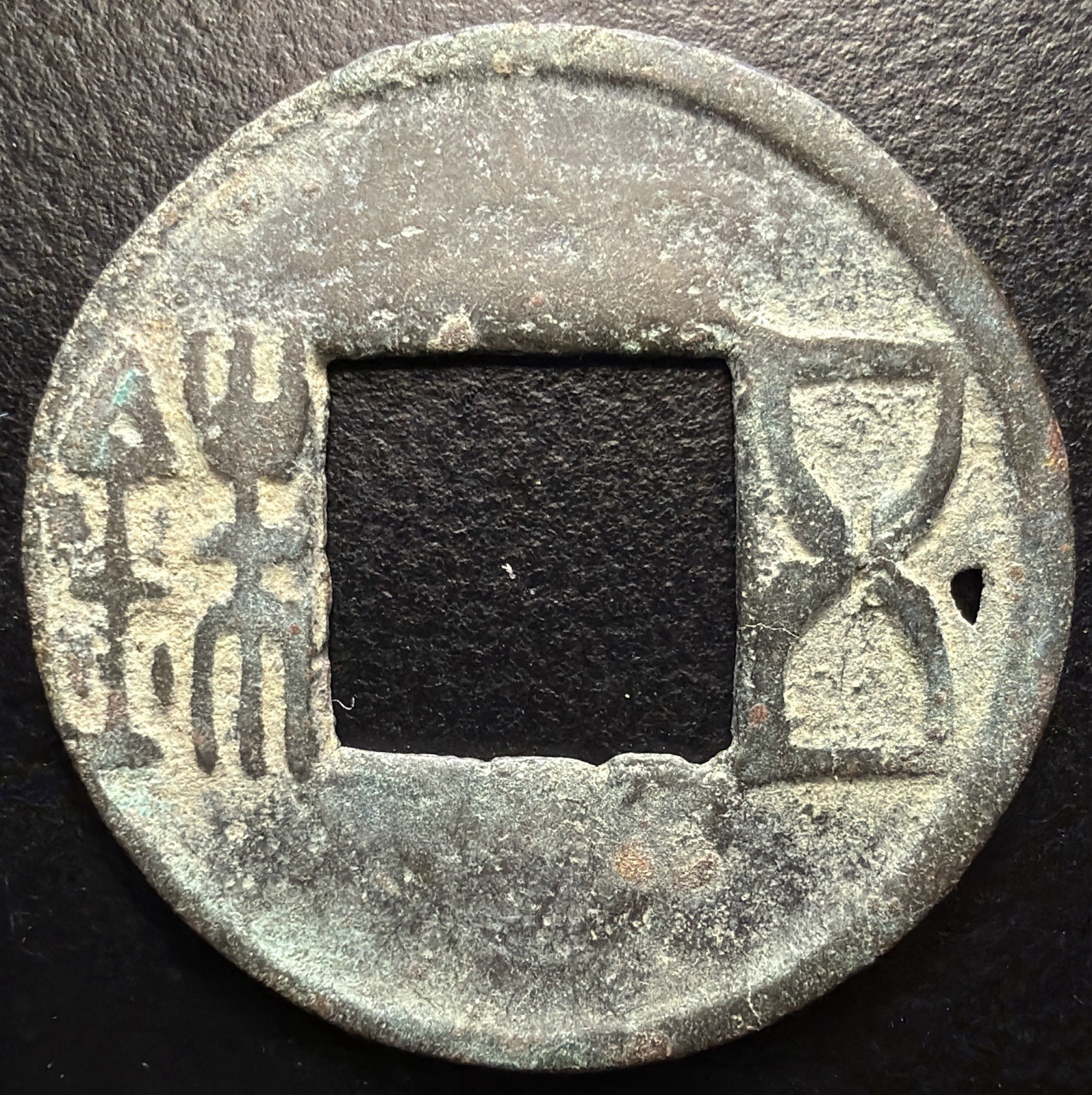 Renminbi (RMB) (meaning “people’s currency”) is the official ISO 4217 name of China’s currency, denominated in 元/圆 yuan (CNY) with the symbol ¥, (or CNH in Hong Kong; but abbreviated RMB for buying gold). Currently the Chinese yuan is pegged to a basket of currencies, including the US dollar, “which the Chinese call mei yuan). The largest yuan banknote is 100 yuan, followed by 50, 20, 10, 5, and one yuan. A jiao is a tenth of a yuan. The jiao is further divided into 10 fen.
1 USD was worth the highest 8.72 on May 1994, then declining gradually to 6.78 on Aug 16. So stock up!
Install both Alibaba’s AliPay & WeChat:
- AliPay https://mobile.alipay.com/
- Sign up with your mobile phone number.
- Go to your profile and tap on bank cards to add your international credit or debit card.
- Verify your identity with your passport details if prompted.
- Scan a QR code 二维码 Èr wéi mǎ for mobile payments.
WeChat: ???
Street signs - Getting around
- 欢迎 huānyíng welcome
- Good morning 早上好 Zǎoshang hǎo
- Good afternoon 下午好 Xiàwǔ hǎo
- Good evening 晚上好 Wǎnshàng hǎo
- 晚上 wǎnshànɡ evening
- 晚 wǎn late / night
- 大家好 = Hello everyone
- 今天 jīntiān today
- 昨天 zuótiān yesterday
- 明天 míngtiān tomorrow
- 时钟 shízhōng clock
- 中午 zhōngwǔ noon
-
分 fēn minute
-
周末 zhōumò weekend
- 标志 Biāozhì = signs
- 出名 chūmíng well-konwn
-
出口 chū kǒu = EXIT
- 开始 kāishǐ to start
-
结束 jiéshù to end
- 機場 机场 jīchǎng = airport
- 海关 hǎiguān customs
- 旅客服务中心 lǚkè fúwù zhōngxīn tourist information center
- 签证 qiānzhèng visa
-
capital city 首都 Shǒudū
- 订房 dìngfáng to reserve/book a room
- 饭店 fàndiàn hotel
- 大厅 dàtīng lobby
- 楼 lóu floor / level
- 房(间) fángjiān room
- 窗户 chuānghù window
- 电视 diànshì TV
- 浴缸 yùgāng bathtub
-
洗手间 xǐshǒujiān restroom
- 温度 wēndù temperature
- 热 rè hot
- 冷气 lěngqì = air conditioning
- 空调 kōngtiáo air conditioner
-
坏 huài bad / broken / doesn’t work
- 计程车 jìchéngchē taxi
- 地址 dìzhǐ address
- 街道 Jiē dào = street/neighborhood
-
门 mén = door/gate
-
失物招领区(处)shīwù zhāolǐng qū (chù) lost and found
-
look here 看这里 Kàn zhèlǐ
- 观光 guānguāng sightseeing
- 旅客 lǚkè tourist
-
旅游景点 Lǚyóu jǐngdiǎn = tourist attraction
-
Unlike in NYC, bus drivers in China wait for people to sit before taking off.
- 抱歉 bàoqiàn to be sorry / “Sorry!”
- 请问 qǐngwèn May I ask…
- 问题 wèntí question
- 怎么样 zěnmeyàng how
Personal possessions
- 贵 guì expensive
Arranged alphabetically:
- backpack – bèi bāo (背包)
- battery - diànchí 電池 电池
- book – shū (书)
- card – shēnfèn zhèng (身份证)
- cards (in wallet) – qiánbāo lǐ de kǎ (钱包里的卡)
- cash – xiànjīn (现金)
- charger – chōngdiàn qì (充电器)
- clothes – yīfu (衣服)
- computer - Diàn nǎo (电脑)
- comb – shūzi (梳子)
- cosmetics / Makeup – huà zhuāng pǐn (化妆品)
- 杯 bēi cup
- glasses – yǎn jìng (眼镜)
- gloves – shǒu tào (手套)
- hair dryer - ???
- hat – màozi (帽子)
- headphones / Earbuds – ěrjī (耳机)
- keys – yào shi (钥匙)
- laptop – bǐjìběn diànnǎo (笔记本电脑)
- 行李 xínglǐ luggage
- mirror – jìngzi (镜子)
- mobile phone – shǒujī (手机)
- 钱 qián money
- notebook (paper) – bǐjìběn (笔记本)
- passport – hùzhào (护照)
- pen – bǐ (笔)
- scarf – wéijīn (围巾)
- shoes – xiézi (鞋子)
- sunglasses – tàiyángjìng (太阳镜)
- towel – máojīn (毛巾)
- toothbrush – yáshuā (牙刷)
- toothpaste – yágāo (牙膏)
- umbrella – yǔsǎn (雨伞)
- wallet/purse – qiánbāo (钱包)
- wrist watch – shǒubiǎo (手表)
-
water bottle / Cup – shuǐbēi (水杯)
- 过期 guòqí = to expire
PROTIP: Devices in the US have voltage: 120V, 60Hz, so need “Type A” US plugs with two flat parallel pins will physically fit into Chinese plugs with a “stepdown” adapter for China voltage: 220V, 50Hz. “Type B” US plugs with a round grounding pin need an adapter that converts Type B (US) to Type I (China).
References:
- https://www.youtube.com/watch?v=rk8Lk4YK6cI = “Shopping at a Supermarket in Chinese : Beginner Mandarin Conversation : HSK 1-2 by Mandarin Breeze : 汉语微风
- https://www.youtube.com/watch?v=kv4LsY_KOfI = All Integrated Chinese in One Video – 8.5 hours – Integrated Chinese Volume 1/ Level 1 Part 1
Home items
- bathroom / toilet
- 下沉 Xià chén sink
- 阳台 Yángtái balcony
- 桌子 Zhuōzǐ desk
- 椅子 Yǐzǐ chair
- 长椅 Cháng yǐ couch
- 房间窗帘 Fángjiān chuānglián room drapes
Transportation
China’s Geography and Economy explained by Glopen:
350 km/hr = 217 mph G series trains are the most mordern.
Passengers are given oxygen in the the world’s highest railway 5,072 m over Tan Gu la pass between Qinghai and Lhasa, Tibet
Driving in China
An International Driving Permit (IDP) is NOT valid. You need to obtain a temporary Chinese driving license. A specialized agency Yaso Trip (which also rents RVs), can handle all the paperwork for foreign RV travelers, including temporary licenses, insurance, and permits for restricted areas. Short-term (up to 90 days): This can be processed easily for about 50 CNY, often with a traffic rules briefing and no road test. Over 90 days, you must pass the full Chinese written driving test.
Didi = Uber
Trains
China has more high-speed trains than the rest of the world, combined.
“Business class” has lie-flat seats with private screens. McDonalds and other meals can be delivered to those individual pods.
12306 train app
Provinces
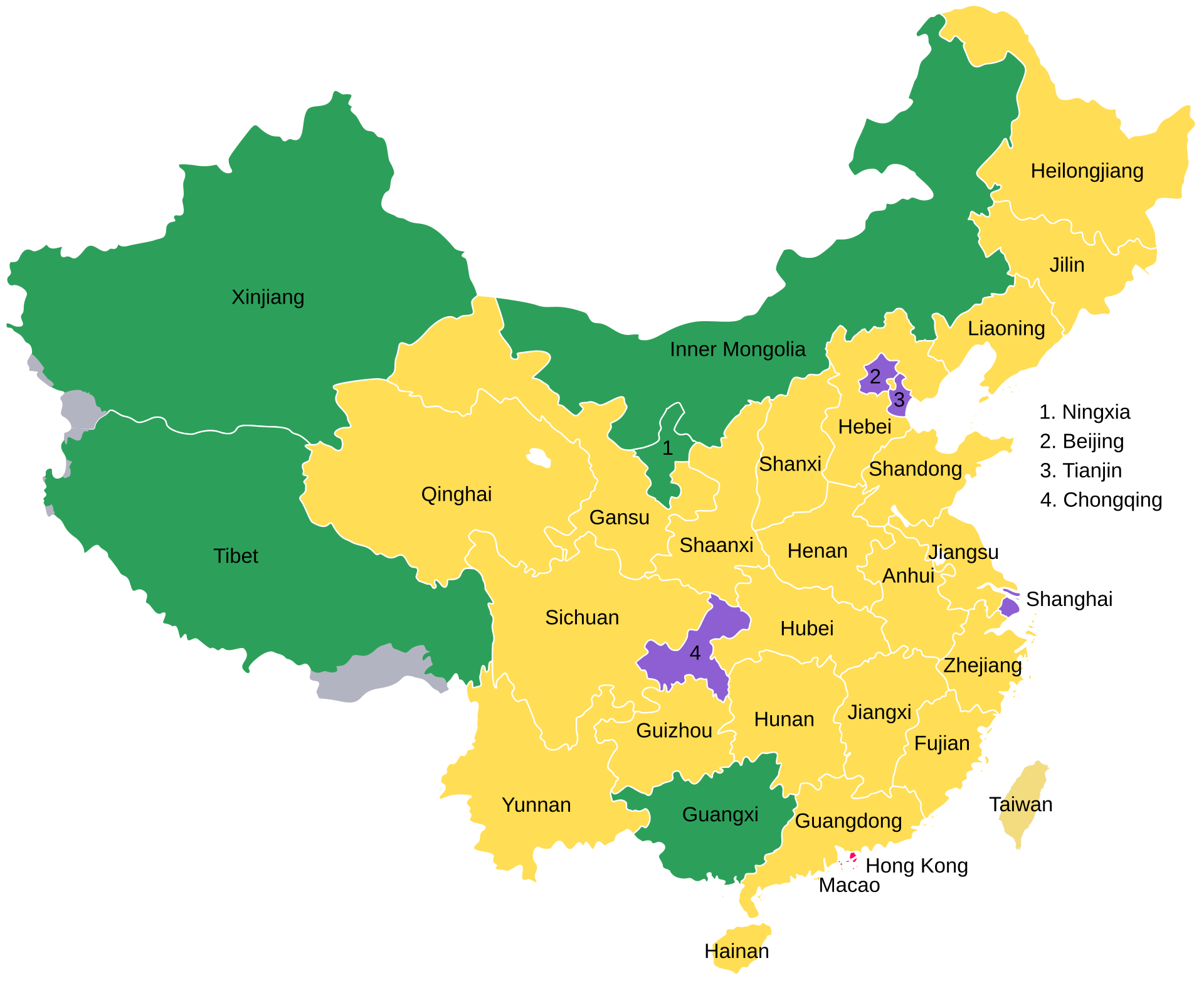
China has 23 Provinces (省 Shěng), Municipalities, SARs. MapsofChina.com. SVG map from Wikipedia.
Province Capital City Notable For
- Guangdong Guangzhou Manufacturing hub, Cantonese food, Shenzhen (tech)
- Sichuan Chengdu Spicy food (mapo tofu), pandas, amazing landscapes
- Yunnan Kunming Ethnic diversity, mild climate, beautiful mountains
- Guizhou Guiyang Karst landscapes, Miao and Dong minority cultures
- Hunan Changsha Spicy food, birthplace of Mao Zedong
- Hubei Wuhan Yangtze River, Three Gorges Dam
- Henan Zhengzhou Central China, birthplace of Chinese civilization
- Shandong Jinan Confucius’s birthplace, big seafood, Qingdao beer
- Jiangsu Nanjing Wealthy, ancient capitals, rice and fish cuisine
- Zhejiang Hangzhou West Lake, e-commerce (Alibaba), tea (Longjing)
- Fujian Fuzhou Fujian cuisine, Xiamen, many Chinese emigrants
- Jiangxi Nanchang Poyang Lake, porcelain (Jingdezhen)
- Anhui Hefei Huangshan (Yellow Mountain), Hui cuisine
- Hebei Shijiazhuang Encircles Beijing, historical sites
- Shanxi Taiyuan Coal, ancient wooden temples
- Shaanxi Xi’an Terracotta Army, ancient Silk Road capital
- Gansu Lanzhou Yellow River, Gobi Desert, Lanzhou noodles
- Qinghai Xining Tibetan Plateau, headwaters of the Yellow River
- Liaoning Shenyang Heavy industry, Korean border
- Jilin Changchun Snow, forests, North Korea border
- Heilongjiang Harbin Ice Festival, Siberian tiger, cold winters
- Hainan Haikou Tropical island, beach resort (Sanya)
- Taiwan Taipei Controlled by the ROC but claimed by the PRC
Major Cities
TASK: pronounce the names of the largest Tier 1 cities (airports):
China is home to 59 Cultural and Natural UNESCO World Heritage Sites - tied with Italy for the most of any country on Earth.
The “Golden Triangle Tour” municipalities (直辖市) of Beijing, Xi’an, Zhangjiajie, Shanghai.
-
Harbin ice fest in janu: luxury hotels in the Songbei District
- 上海 Shàng hǎi 2480万 = Shanghai PVG SHA
- Aurora Museum
- Yu Garden (Yuyuan)
- Shanghai Disney Resort
- Shanghai Tower ride view
- Ultraviolet restaurant (French/Sensory experience – one of the world’s most unique dining experiences)
- Classical Gardens of Suzhou from the 11th to 19th centuries is the “absolute pinnacle of Chinese landscape garden design, where nature is miniaturized into a perfect, philosophical microcosm.”
- Bund road, Shanghai Gold Exchange International Board
- Huangpu River cruise skyscrapers of Lujiazui (Pudong)
- Walk Suzhou Creek & Nanjing Road Pedestrian Street
- 北京 Běi jīng - 2183万 = Beijing (North capital) = PEK (PKX)
- Forbidden City’s golden ginkgo trees: Get there early (6am). Begin with the side halls instead of the main central axis.
- Xiangshan Park red maple leaves in autumn
- Summer Palace
- toboggan down the Great Wall (Mutianyu section)
- Temple of Heaven, Summer palace
- Museum
- Tsinghua is ranked #11 globally, top among the C9 (China’s Ivy League) VIDEO: The Harvard of China: Why Can’t Everyone Get Into Tsinghua?! by Zahra.polyglot VIDEO
- Xi’an Terracotta Army and City Wall: Go against the typical flow: start with Pit 3 (the quietest), then visit Pit 2, and finish with Pit 1.
- Xi’an Lintong museum - hands-on experience restoring relics under expert guidance.
- Zhangjiajie National Forest Park (floating “Hallelujah Mountains” in the movie Avatar) Wuling mountain range of Guizhou.
-
Chongqing, with ~32 Mil, being “5D” mountainous is the most populated city proper in the world, with hot pot panda zoo. Chiqikou old town.x VIDEO
-
深圳 Shēn zhèn 1780万 = Shenzhen SZX Huaqianbei hi-tech shops
- 广州 Guǎng zhōu 1880万 = Guangzhou CAN
- 香港 Xiānggǎng = Hong Kong HKG - Tiger Balm gardens railroad
-
重庆 Chóngqìng = Mountain City
- Chengdu panda base
-
Shaolin Kung Fu Monestary in Dengfeng
- Quanzhou (a massive medieval port city that was the starting point of the Maritime Silk Road)
Health certificate (体检证明) – from a government-approved Chinese hospital.
Private International Insurance: You must have comprehensive medical insurance. A serious illness without insurance could bankrupt you. Options: Cigna Global, Bupa, Allianz, IMG, GeoBlue. Expect to pay 3,000 − 3,000−10,000 USD/year depending on age and coverage. Jiahui, Parkway, United Family
Flights
Searching for flights in a private browser window to prevent prices from increasing based on your search history. Flights into Taipai City (TPE) is about $900, cheaper than into the mainland.
The 12-13 hour SFO (San Francisco) across the Pacific ocean to Shanghai (PVG, SHA) is the shortest direct route to China from the US. Flights East-West take 2 hours longer due to headwinds.
✈️ Compare prices on Trip.com, Skyscanner, Momondo, and Google Flights. Set up price alerts to track drops. Consider budget-friendly airlines like airchina.com.cn, China Southern, or hainanairlines.com. Airline prices in China are centrally managed by the TravelSky system (the national GDS). So use the Qianwen App + Fliggy (Alibaba’s travel platform).
Travel on Tuesdays/Wednesdays. Book 1-3 months in advance. Travel in off-peak months like May, June, September, or November. Connecting Flights: one-stop flights via hubs like Dubai, Seoul, Tokyo, or Hong Kong are often cheaper than direct flights. Consider flying into a nearby city and taking the high-speed train. Check for flight + hotel packages, which can be cheaper than booking separately.
Taking crowds, weather, and scenery into account, the best months to travel are April, May, September, and mid-to-late October. Summers are the peak season.
- 特別 tèbié special
- 酷 kù cool
- 有意思 yǒuyìsi interesting
假期 Jiàqī = Holidays:
- Dec 31 fireworks & Jan 5 opening: Harbin Ice and Snow festival: Enter before 2pm for sunsets at 4.
- Feb. New Year
- Apr 3-5 - Qingming Festival
- Apr 30 - May 4 - Labor Day
- Mid to late June brings frequent downpours
- July and August - short showers in the morning or evening.
-
Sep 30 - Oct 6 - National Day
- 2026-02-28 International Women’s Day
- 2026-05-24 International Children’s Day
Language Glossary
A morpheme is the smallest unit of meaning in a language.
A word is the smallest independent/free unit of meaning.
Among the 3,500 most commonly used Chinese characters, there are 132 component bujian.
There are about 60 pictograms (xiàng xing) depicting objects. They form single core components used to build 99% of common characters.
Ideograms (zhǐ shì) represent abstract concepts
- Indicatives
- Associate compounds - [2m31s] Radical + sound card
- Pheno-semantic compounds zzz Common Radicals Master List: https://drive.google.com/file/d/1Mkw3VRScOg0i6XqUd78bRethxIlyirfp/view?usp=sharing
The 60 Essential Bricks: https://drive.google.com/file/d/19HeF9KnBGkfulDD_ILa3IlhQQ-9ClW7b/view?usp=sharing
Meaning block
Among Languages of the world
VIDEO: Millions of people:
- 929.0 - Mandarin Chinese (汉语) Hànyǔ Mandarin Pǔtōnghuà (普通话 common speech)
- 474.4 - Spanish
- 372.9 - English
- 343.9 - Hindi
- 233.7 - Bengali
- 232.4 - Portugese (Brazilian)
- 154.0 - Russian
- 125.3 - Japanese
- 92.7 - Western Punjabi
- 85.2 - Yu Chinese (Cantonese, etc.)
YouTube influencers on living in China:
Language History
References:
- https://www.youtube.com/watch?v=V8EFhnMaVRk
- The earlist appearance of Chinese script is on oracle bones (甲骨文) during the Shang dynasty, discovered in 1899.
- Bronze script.
- The first emporor, Qin Shi Huang, around 221-1 BC, standardized weights, measures, and writing into “Small Seal Script” as “clerical script” was gaining ground on official documents 200 BC - 300 AD during the Han dynasty.
- Abbreviated cursive “Grass” script by poets developed into more regular kaishu (楷书) script used today.
- “Running script” xingshu since 100 AD is stylistically between the two.
Early writing were vertical and did not include punctuation marks to show end of sentences.
English translation of https://github.com/skywind3000/ECDICT provides Python code to process case-insensitive csv to SQLite and MySQL databases containing a “Free English to Chinese Dictionary Database” of 100,000 entries. From ECDICT, Oxford 3000 core vocabulary list,
Words in the traditional paper dictionary are arranged by the stroke count.
Six writings
The first chinese dictionary (Shouwen jiezi) was compiled by Xu Shen in published in Eastern Han around 100 AD. He divided letters into “6 writings” (liushu) It listed the character for “mountain” with what is now the traditional variant used in Hong Kong.
Woodblock printing was invented during the Tang dynasty around 600 AD. Around 1039-1048 AD, Bi Sheng invented movable clay type printing, which broke often. But Japanese, which used only 2,136 characters, made metal movable type using the “Ming Dynasty” font (Minchotai). Gutenberg began experimenting with printing and movable type in Strasbourg, Germany around 1430. 1454–1455: Guttenberg invention was proven a massive success with the printing of the Gutenberg Bible (also known as the 42-line Bible), which is considered the first major book printed using his movable type system.
In 1959, 3,624 commonly used chinese word list was defined by ZWGW.
Samuel Toddwell at MIT Each Chinese character is written using up to 62 strokes in the same order. but autocomplete 12 fundamental strokes are mapped to IBM Sinotype keyboard, plus 3 alternate numbers keys.
From “The Chinese computer” by Thomas Mulllany at Stanford In 1980 mainland China defined GB 2312 Unicode set containing 6,723 double-byte characters. In 1983, CCDOS created an add-on board to process double-byte chars. See drama “Our Times”. In 1984, Taiwan defined the Big 5 (Traditional Chinese) Character code table containing 13,060 characters, which Hong Kong adapted after HKSCS FA40-FEFE (UDA1) supplemental set. In 2000, the CJK Unified Ideographs Extension B was defined as ISO/IEC FCD 10646:2000 containing 97,000 characters so that the same Hansu input character display as different glyph for each country.
Mainland china defined Standard, Traditional, and Variant characters while Taiwan defined Orthodox and Variants. About 2,500 characters were simplified in mainland China, some based on cursive script characters which existed earlier. That’s the case for the word cloud (yun) and love (ai).
Hong Kong defines its own HKSCS (Supplementary Character Set) every 4 years.
Videos:
- https://www.youtube.com/watch?v=riZ5hZUOlk8 The Impossible Chinese Typewriter by Julesy
- https://www.youtube.com/watch?v=-IhuFgiWNS4 We Built a Chinese Typewriter… (based on a 1953 patent) that can print 90,000 characters mechanically. by HTX Studio
- https://www.youtube.com/watch?v=hYYHMLsPD6Y&pp=ugUEEgJlbg%3D%3D How Chinese Invented Computing’s Predictive Text
- https://www.youtube.com/watch?v=hBDwXipHykQ 21:06 How China Conquered The Keyboard by Johnny Harris
apps
At home in America, on internet browsers such as Google Chrome, I keep open all the time one of these pronunciation websites where I paste words I copy Chinese from other tabs:
-
Forvo for Mandarin
https://forvo.com/search/%E5%88%9D%E4%B8%80/ (初一)Click the blue dot with the triangle to hear the pronounciation.
Observe the “REGULATED BY 国家语言文字工作委员会 民事服务局”
-
For dictionary definitions, type a prompt in an AI chat website such as z.ai, deepseek.ai, perplexity.ai, etc.
-
GoKollab for Android and iPhones</a> (by LEADCONNECTOR) is used by YouTuber CantoToMando.
-
Didi is the ride-hailing app like Uber.
- 频道 Píndào = channel feature
- 新版频道 Xīnbǎn píndào - qq feature
Typing Chinese
Chinese uses characters. The pronunciation of a character includes a syllable and a tone. Tone is the use of pitch to distinguish lexical or grammatical meanings.
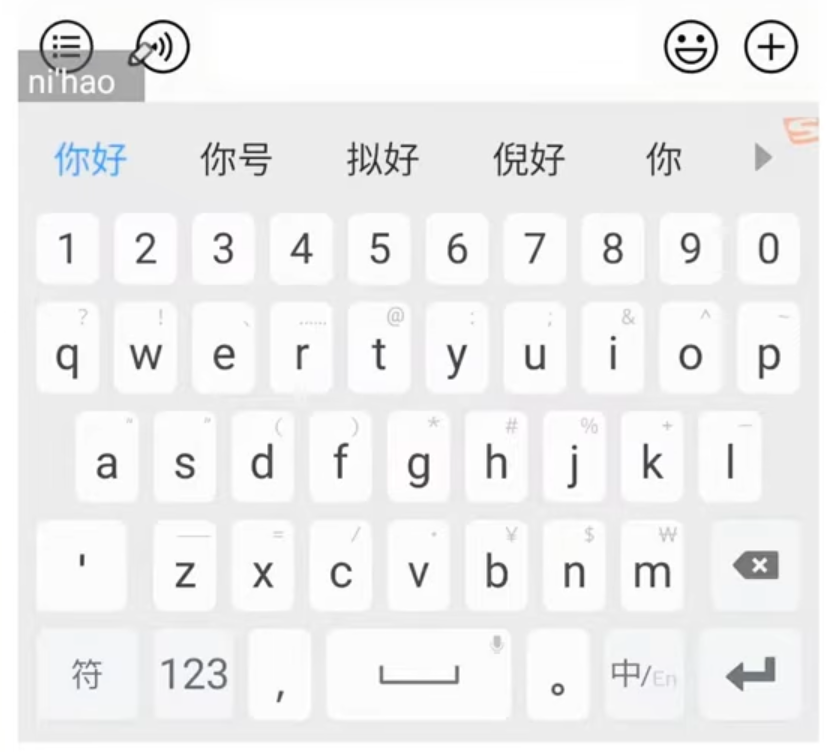 To set up the Pinyin Keyboard for use by other apps on your computer:
On Windows:
- Click the Start Menu and go to Settings.
- Go to Time & language > Language & region.
- Under “Preferred languages,” click Add a language.
- Search for Chinese (Simplified, China) and click Next, then Install.
- Once installed, click the three dots next to it (or click the language) and select Language options.
- Under “Keyboards,” click Add a keyboard and choose “Microsoft Pinyin”.
- To switch: Press Windows Key + Spacebar to cycle through your languages. Look for the abbreviation “CH” or a Chinese character in your taskbar.
On macOS:
- Open System Settings (or System Preferences).
- Search or scroll down the left menu to Keyboard
- At the “Text Input” (or “Input Sources”) section, click “Edit” of Input Sources for a pop-up.
- Click the “+” button at the lower-left for a pop-up of keyboards.
- Search for “Chinese, Simplified” at the left and select it.
- On the right side, choose “Pinyin - Simplified”, then click Add to dismisss the pop-up.
- Click “Done” to dismiss the pop-up menu.
- Click the red “x” at the upper-left to dismiss the Keyboard pop-up menu.
- To switch from within any app: in your top menu bar, click the (A) flag icon, click “Pinyin” or or press Control + Spacebar.
On iPhone/iPad:
- Go to Settings > General > Keyboard.
- Tap Keyboards > Add New Keyboard…
- Find Simplified Chinese and tap it.
- Turn off “Show Predictions” if you don’t want the English keyboard to try and autocomplete Chinese words (or leave it on, it’s personal preference).
- To switch: Tap the Globe icon on your keyboard.
On Android mobile:
- Go to Settings > System > Languages & Input > On-screen keyboard.
- Select your current keyboard (usually Gboard).
- Tap Languages > Add keyboard.
- Find Chinese (Simplified) > Pinyin and download/enable it.
- To switch: Tap the Globe icon on your keyboard.
Pinyin Alphabet
VIDEO: The Pinyin alphabet 拼音 (Literally: spelled sounds) was created in 1958 (as ISO 7098-1982) to help pronounciation, not as a whole language like Japanese Romaji text. Pinyin enables Chinese to be typed into QWRTY typewriters used throughout the world.
Alternately, the Zhuyin alphabet is used by Taiwan since 2009 (not covered here). There is also IPA used by academics.
-
After you have installed the Chinese keyboard
-
To type an accented vowel, hold down the base vowel letter (a,e,i,o, or u, with or without pressing shift for upper case) until a small menu with accent options appears (e.g., 1: è, 2: é, 3: ê, 4: ë):

Then click the accent you want or press the corresponding number key (e.g., press 2 for á,é,etc.).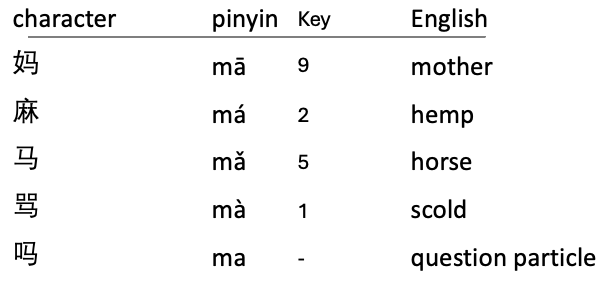
Alternately: Use the “Option Key” Method (Fastest for Touch Typists and the traditional Mac method where you do not have to hold the keys down at the same time: a two-step process:
- Acute (´): Press Option + E, then type the letter (e.g., é)
- Grave ():** Press **Option+
(the key right above the Tab key), then type the letter (e.g., è) - Circumflex (^): Press Option + I, then type the letter (e.g., ê)
- Umlaut/Trema (¨): Press Option + U, then type the letter (e.g., ü) To type Ü with an umlaut diacritical, type v – when the consonant is N or L.
- Cedilla (¸): Press Option + C (this types ç immediately without needing to press C again)
- + Tilde (~): Press Option + N, then type the letter (e.g., ñ)
Alternately, use the Mac Character Viewer for rare symbols by pressing Control + Command + Spacebar (or go to Edit > Emoji & Symbols in the top menu bar). In the search box at the top right, type the name of the accent (e.g., “acute” or “umlaut”). Double-click the character you want to insert it into your text.
PROTIP: Type an apostrophe between syllables for multiple-syllable words such as the city Xi’an (西安). Typing xian without the apostrophe would incorrectly yield the single word 先 or 仙.
-
If an autocomplete option is offered, press Spacebar to select the top choice. If not, press a number or press arrow keys to select another option.
Pinyin Pronounciation
“Pinyin” which defines how Chinese is pronouced.
Similar to the ABCs being the first 3 letters of the English alphabet,”BoPoMoFo” is the first four letters (b p m f) of the “Romanized” Chinese alphabet. But ignore the “o” because they’re pronouced differently.
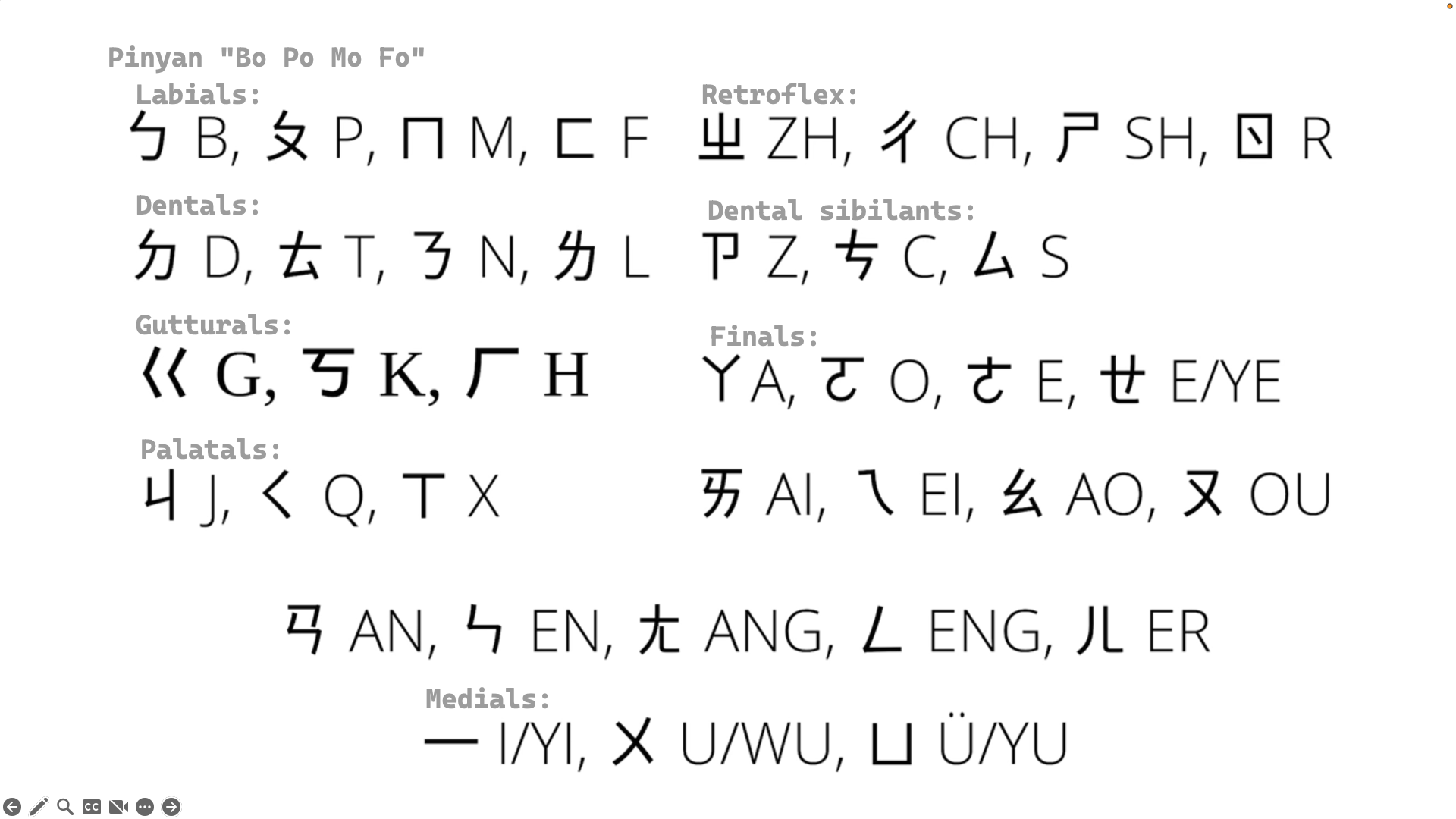 The alphabet for pinyin consists of 26 English letters.
The letter V is only used to spell foreign names.
The alphabet for pinyin consists of 26 English letters.
The letter V is only used to spell foreign names.
A syllable contains an initial and a final. The initial is the beginning consonant of a syllable, whereas the final is the simple or compound vowel of a syllable. For example, “好” is pronounced hǎo with h being the initial and ɑo being the final. The mark (ˇ) over a in ao is the tone.
To practice your tones, use:
- http://www.archchinese.com/mandarin_chinese_tone_drill.html which can customize learning games.
- [Pronounce]:
Memonic: BoPoMoFo are “labial initials” because they involve lip (labial) movement.
- b B is like the b in “burger”.
- p P is like the purr like a cat.
- m M is like M in money.
- f F is like fun as in games.
Memonic: Memonic The next four are called “dental” initials are pronouced by touching the tip of your tongue to the back of your teeth.
- d D is the initial of duck
- t T is the initial of tough guy
- n N is the initial of nut
- l L is the initial of lucky
Memonic: <a target=”_blank” href=”https://www.youtube.com/watch?v=Hv6WEWS_re8&t=5m2s] Gutteral initials:
- g G as in guy punch
- k K as in come (here)
- h H as in honey
Memonic: <a target=”_blank” href=”https://www.youtube.com/watch?v=Hv6WEWS_re8&t=[5m36s] Palatal initials:
- j J as in Genie
- q Q as in chipping bird
- t T as in she as in the female bathroom sign
Memonic: <a target=”_blank” href=”https://www.youtube.com/watch?v=Hv6WEWS_re8&t=[6m45s] Retroflex initials (roll-tongue edge sounds)
- zh ZH as in drummer
- ch CH as in truck
- sh SH as in mushroom
- r R as in shussh (to keep quiet)
Memonic: <a target=”_blank” href=”https://www.youtube.com/watch?v=Hv6WEWS_re8&t=[9m4s] Dental sibilants
- Z and in zap when a mosquito gets too close to a zapper
- C as in the z in putz (stupid guy)
- S as in snake
Memonic: <a target=”_blank” href=”https://www.youtube.com/watch?v=Hv6WEWS_re8&t=[10m22s] Medials:
- I/YI as in eee screaming
- U/WU as in uoh when someone fell
- U/YU as in e of sweet
Memonic: <a target=”_blank” href=”https://www.youtube.com/watch?v=Hv6WEWS_re8&t=[12m48s] Finals:
- as in the o in bow tie
- as in pan for bread
- as in the last part of youngin
- ANG as in ong in wrong
- ER as in er I don’t know what to say
REMEMBER: Although the same letters in the English ABC alphabet are NOT pronounced the same in Pinyin. So English speakers need to un-memorize the English pronouciations associated with each letter in the ABCs.
“zh”, “ch”, “sh”
REMEMBER: Some Pinyin words have one of 23 initial consonant sounds.
REMEMBER: y and w are at the end of the list because they’re used as syallable separators.
REMEMBER: VIDEO:
Each pinyin word has a tone and 24 finals (some with an umlaut above u):
zn-finals-1920x1080.png
VIDEO: REMEMBER: 16 Whole-recognition syllables: zhi, chi, shi, ri, zi, ci, si, yi, wu, yu, ye, yue, yuan, yin, yun, ying
Get your free Chinese pronunciation PDF chart at: https://bit.ly/slc-chart
- https://www.youtube.com/watch?v=Hv6WEWS_re8 = Learn the Chinese Alphabet in Less Than 20 min! Pinyin & Zhuyin (Bopomofo) https://bit.ly/slcvocab
- https://www.youtube.com/watch?v=rRHJZMBT9AM&list=PLlHLXsD5BfOt-veEwbAJ3wZOs8T9NsFqH = @Harbin Mandarin playlist
- https://www.youtube.com/watch?v=s663Wghq-u4&pp=ugUEEgJlbg%3D%3D = Chinese Alphabet for Beginners- Lesson 1: Why Learn Pinyin Not Bopomofo?-Systematic Pinyin Course by Yuna Chinese
- https://www.youtube.com/watch?v=miatt5UNq-k “Memorize ANY Chinese Character FAST with Mnemonics” by HanziHero with $15/mo https://hanzihero.com (~50+ words added weekly) 70+ Pinyin sound mnemonics, 500+ Components
Tones
Tone is specified by diacritical marks above vowel letters:
zn-tones.png
(Cantonese has 6 tones)
https://www.youtube.com/watch?v=obeYAqRDL5E&pp=0gcJCTIB7p79v9jh Learn the 4 Chinese Tones by Sing and Learn Chinese
https://www.youtube.com/watch?v=ITSGWi8K-Zk&list=PLv3qxksYLwDNokCz0xIMNeMlon5RR7ooU Learn to Sing Chinese Songs (Lyrics Explained) by Sing and Learn Chinese
https://www.youtube.com/watch?v=UzZyc2BobYw sound alike questions
https://www.youtube.com/watch?v=ATtAHQQKBas https://www.youtube.com/@learnchinesenow
logographic writing system
Always write in the same sequence of strokes:
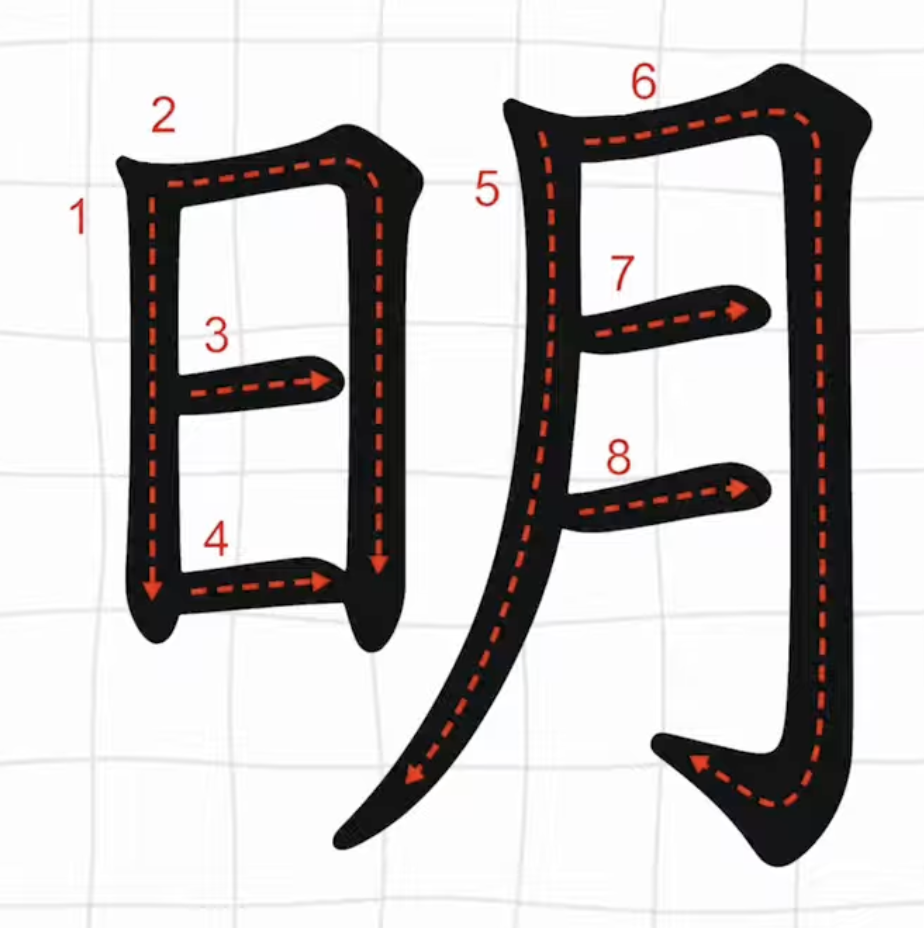 Write from top left to right, top to bottom.
https://www.youtube.com/watch?v=QSeInNtwvEY&pp=ugUHEgVlbi1VUw%3D%3D morse code won’t work telegraph by coversion to numbers that took months to learn.
https://www.youtube.com/watch?v=sSKoWfa5Z1I
https://www.youtube.com/watch?v=BLdvTuY7OB8 New HSK 1 Course Workbook Lesson 6 : Exercises with Answers : Complete Practice & Solutions by Mandarin and Mountains
https://www.youtube.com/watch?v=Std-ucWlfTk 10:14 Speak Chinese Now: 100 Essential Chinese Sentences for 30 Everyday Situations : Part 2 by Effortless Chinese
Seasons
- 春天 Chūntiān = Spring:
- 秋天 Qiūtiān = Autumn:
- 冬天 Dōngtiān = Winter:
- 夏天 Xiàtiān = Summer:
Dates Months, Numbers
Instead of the European custom of unique names like “January”, Chinese reference months by number 1 to 12 and add 月 (yuè) which means “month” and also “moon” for lunar. 3rd 三月 is spoken as one fluid word. Although 一月 is technically Yīyuè (with a high, flat tone on “yi”). But in natural speech, it often changes to Yíyuè (with a rising tone) because it’s followed by another fourth-tone syllable (yuè).
VIDEO: On crowns (lieu) worn by emporors during grand ceremonies, the jade pieces hanging down are on 12 strings (chong’er) for the months of the year:
- 一月 Yīyuè January
- 二月 Èryuè February
- 三月 Sānyuè March 23
- 四月 Sìyuè April
- 五月 Wǔyuè May
- 六月 Liùyuè June
- 七月 Qīyuè July
- 八月 Bāyuè August
- 九月 Jiǔyuè September 23
- 十月 Shíyuè October
- 十一月 Shíyīyuè November
- 十二月 Shíèryuè December
“March 15th” is 三月十五日 (Sānyuè shíwǔ rì) or 三月十五号 (Sānyuè shíwǔ hào) with 号 (hào) being more common in everyday spoken Chinese.
- 二十一 (èr shí yī) = 21
- 百 (bǎi) = hundred
Compass Directions
- North 北 Běi (as in Beijing)
- South 南 Nán (as in Nanking)
- East ?东方 Dōng fāng
- West 西方 Xī fāng = West side
yàng rén = lit. ocean (meaning overseas) people is the more archaic reference except for a few words:
- yàng fú = western clothes
- yàng qì = western style
- yàng cōng = western (yellow) onion (vs green onion = cōng)
Dynastries History
VIDEO: Xia > Shang > Zhou > Qin > Wu > Han > 3 > Jin > S&N > Tang > 5/10 > Khitan/Liao > Song > Yuan > Ming > Qing
- 2070 – 1600 BC = Xia (legendary Yu who managed Yanze floods) Suceeded by son Yi, then corrupt Ji
- 1600 – 1046 BC = Shang (Bronze age)
- 1046 - 256 BC = Zhou (see sub-periods)
- 221 – 206 BC = Qin - chin
- Ying Zheng (251-210BC) first emporor’s 15 year reign unified, started Great Wall) then separated into 18 kingdoms, acording to “Records of the Grand Historian” written during the Han dynasty
- 136 BC Wu academies. silk road to Rome
- 66 BC Best emporor Zhan “subdued enemy without fighting - Art of war
- 206 - 220 AD = Han (漢) - sub-periods:
- 206 BC – 9 AD = Western Han(西漢)after 4 years, Liu Bang becomes emporor Gaozu
- 9 – 23 AD = Xin mang(新莽)= new. Regent Wang Mang who abolishes slavery with price controls, land distribution, banking
- 25 – 220 AD = Eastern Han(東漢)Liu to Guangwu
- Son’s “Rule of Ming & Zhang”
- 220 – 280 AD = Three Kingdoms (三國魏) (period of disunity) VIDEO, VIDEO.
- Cao Cao in battle of Red Cliffs
- 265 – 420 AD = Jin (晉) = enter, advance - sub-periods:
- 265 – 316 AD = Western Jin (西晉)
- 317 – 420 AD = Eastern Jin(東晉)
- 420 – 589 AD = Southern & Northern Dynasties (南北朝宋) - period of disunity:
- 581 – 618 AD = Sui (隋) 37 years
- 618 – 907 AD = Tang (唐) (golden age)
- 630 = General Li Jing defeats Turks and capture jade held by empress Xiao.
- 665 - 690 AD ruled by Wu Zetian (only woman empress) renamed jade to Bao (treasure)
- 690 – 907 AD ???
- 907 – 923 AD = Five Dynasties & Ten Kingdoms (五代後梁)
- 923 - 937 AD = Later Tang 後唐 Hòu táng - under Li Cunxu, who set his family on fire in a tower, but the was seal not found, thus lost.
- 936~946 後晉
- 947~950 後漢
- 951~960 後周
- 902~937 十國吳
- 907~925 前蜀
- 907~978 吳越
- 907~951 楚
- 907~971 南漢
- 909~945 閩
- 924~960 南平(荊南)
- 934~965 後蜀
- 937~975 南唐
- 951~979 北漢
- 907 - 1125 AD 遼建國於西元907年,國號契丹,916年始建年號,937年改國號為遼,983年復稱契丹,1066年仍稱遼。Founded in 907 AD with the state name Khitan, then began to use an era name in 916, changed the state name to Liao in 937, reverted to Khitan in 983, and was still called Liao in 1066.
- 960 – 1279 AD = Sòng (宋) = poem - sub-periods:
- 960 – 1127 AD = Northern Song(北宋)
- 1127 – 1279 AD = Southern Song(南宋)
- 1032 ~ 1227 AD = (西夏)
- 1115 - 1234 AD = gold (金) 金子 Jīnzǐ
- 1206 ~ 1367 AD = Yuan (元) Mongol empire founded by Temujin Genghis Khan
- 1271 – 1368 AD = Kublai Khan establishes the Yuan Dynasty
- 1279 - Southern Song Dynasty destroyed
- 1368 – 1644 AD = Ming (明) = brilliant (centralized Yu Shan Fang)
- 1644 - Prince of Gui killed.
- Morphine
- 1616 - 1911 AD = Qing (清) = pure/clean
- initially called the Later Jin.
- 1636 - Hong Taiji as “Manchu” name to Qing (清)
- 1644 - enters the Central Plains
- https://www.youtube.com/watch?v=B-p0_jdn-hU XiXi buriel site looted by soldier Sung Dung Ying
- 1920 https://www.youtube.com/watch?v=THdguXECRCU GuangShu confirmed aresnic

References:
- MUST WATCH VIDEO explaining the PDF: Chinese Emperors Family Tree (by UsefulCharts)
- Why the West is running a smear campaign against China by Kishore Mahbubani
- https://www.cambridge.org/core/books/animals-through-chinese-history/chronology-of-dynasties/4C67438128929A17558EEDD834C20D58
- VIDEO
- VIDEO
MUST WATCH: “All of China’s Dynasties in ONE Video”
VIDEO: “China’s Dynasty Names Mean More Than You Think”
Learn Chinese Now
- https://www.youtube.com/watch?v=Lp60Y9L_3Wg = 16:01 The Chinese Gods EXPLAINED (in 3 realms & 5 elements)
- https://www.youtube.com/watch?v=Pa6UpQFnJVg = Chinese MYTHICAL Animals EXPLAINED… Dragon, 9-Tail fox, Q
- Shang-Chi and the Legent of the Ten Rings
Lecture 1, 3, 21, 23: 2024 Introduction to China’s History by MIT OpenCourseWare featuring Tristan G. Brown
- Journey to the West 1986 TV series during Song dynasty (monkey king)
- “The Dream of the Red Chamber”
https://www.youtube.com/watch?v=IW-Wcv-ieiI 53:19 CHINA: The Civilization That Reset Itself Three Times : 4K Documentary by Where on Earth
https://www.youtube.com/watch?v=96i2RzaDEIk China’s ENTIRE Three Kingdoms Story in ONE Video 220 AD when last Han Dynasty emporor abdicated.
Qin Dynasty to Qing Dynasty (221 BCE - 1912 CE)
Tan Dynasty the golden age. 618-907 AD
https://www.netflix.com/watch/81605078?trackId=284616272 Movie: Who Rules the World (40 episodes)
https://www.youtube.com/watch?v=SHBTevu_eTc&pp=ugUHEgVlbi1HQg%3D%3D 39:33 Inside The Forbidden City: Historian Explores Ancient Beijing History Hit
Why Every Chinese Name Tells a Unique Story
Famous battles in China
Top 5 Most Epic Battles in Chinese History
Ancient China’s Deadliest Battles Were Worse Than You Think:
- 00:50 The Battle of Changping
- 09:59 The Battle of Julu
- 16:57 The Battle of Mobei
- 24:59 The Battle of Sarhu
- 33:20 The Battle of Shanghai European artiller
Other countries
TRIVIA: China shares land borders with 14 countries.
- 亚洲 Yăzhōu * Asia
- Russia
- Korea
- 台湾 Táiwān Taiwan
- 香港 = Xiānggăng Hong Kong
- 日本 Rìběn Japan
- 印度 Yìndù India
- Cambodia
- 泰国 Tàiguó Thailand
- Myamar
- Vietnam
- 澳洲 Àozhōu Australia
- 北美洲 Běiměizhōu North America
- 加拿大 Jiānádà Canada
- 美国 Měiguó The United States (gold mines)
- 南美洲 Nánměizhōu South America
- Bolivia (silver mines)
- Venusquela (oil. 29-hour flight thru Auckland)
- 欧洲 Ōuzhōu Europe
- 法国 Făguó France
- 英国 Yīngguó UK
- 意大利 Yìdàlì Italy
- Portugal
- 俄罗斯 Èluósī Russia
- Middle East
- Brunei Darussalam (China’s airbase)
- 非洲 Fēizhōu Africa
- 南极洲 Nánjízhōu Antarctica
Century of Humiliation
During the “Century of Humiliation” for China atartin 1839, foreign powers imposed unequal treaties, extracting wealth from China during two “Opium Wars”. Hong Kong was ceded to England and Macau to Portugal. France and other Europeans got a piece of Shanghai. Since 1997 Macau has the highest per-capita income in the world. However, trauma remain in a mindset even in young people:
- In the early 1800s, Britain was buying massive amounts of Chinese tea, silk, and porcelain, but China didn’t want British goods. When Britain ran low on silver (from Bolivia) This created a massive trade deficit for Britain (Britain was losing tons of silver to China). To fix this, British merchants (with the backing of the British government) began illegally smuggling opium grown in India into China, which created millions of addicts.
- 1839 – 1842 The First Opium War
-
- The Treaty of Nanjing forces China to cede Hong Kong to the British Empire until 1997.
- January 24, 1848. Gold discovered at Sutter’s mill in Coloma, 45 miles northeast of Sacramento, California. Chinese Diaspora of 250,000 begins.
- 1850–1864. Taiping Rebellion led by Hong Xiuquan, who believed he was the brother of Jesus Christ, led to an estimated 20 to 30 million deaths.
-
- In “People v. Hall”, California Supreme Court ruled that Chinese immigrants (“Mongolian”) were not allowed to testify in court against a white person. This led to increased violence.
- 1856 – 1860. After losing the Second Opium War, China is forced to legalize the opium trade and cede the Kowloon Peninsula to the British and 400,000 square miles (outer Manchuria), including the Pacific port of Vladivostok. Westerners could build churches anywhere in China.
- May 10, 1869. The photo at Promontory Summit, Utah celebrating the transcontinental railroad completion deliberately excluded the 10,000 to 20,000 Chinese workers (80% to 90% of the Central Pacific Railroad’s labor force). Chinese workers were paid significantly less than white workers. Over 1,000 Chinese workers died in avalanches, explosions, and landslides.
-
- White workers, facing unemployment and lower wages, begin to violently blame the Chinese. Anti-Chinese riots break out across the West (in Montana and most notably the Los Angeles Chinese Massacre of 1871).
-
- “Self-Strengthening Movement” adopted Western technology and military hardware, but did no adopt Western political, economic, or educational systems over China’s Confucian culture.
- May 6, 1882. The Chinese Exclusion Act is passed by Congress and signed into law by President Chester A. Arthur. The law was made permanent in 1902.
-
- Ching Hi? revolution, then war lords
-
- Japanese invade China
-
- Japanese bombing of Pearl Harbor begins war with the US
-
- Civil War resumes in China. Long March.
- October 1, 1949. Mao proclaims the PRC. US-backed Nationalists flee to Taiwan.
- 1958 “The Great Leap Forward” established collective farms
- October 3, 1965. The US Immigration and Nationality Act (Hart-Celler Act) signed into law by President Lyndon B. Johnson. It dismantles the discriminatory quota of 105 Chinese immigrants per year into the US.
- 1971 PRC replaces Taiwan at the UN
-
February 21-28, 1972. Nixon’s visit to Mao
- 1989 Tienamen square
- 2001 China enters World Trade Organization
- 2008 Global financial crisis
-
- Frank Wolf (R-VA) Amendment (Section 1340 of Public Law 112-10) restricts appropriations for NASA cooperating with China (International Space Station). China’s civilian space program (CNSA) is heavily intertwined with the People’s Liberation Army (PLA). Bad idea.
- 2018 Trump launches tariff trade wars
- 2019 COVID lock-down
- 2020 US senator Marco Rubio (Lu Bi Ao) labeled a liberal and banned from China for his criticism of Uyghurs and Hong Kong protesters.
- May 14, 2026. US senator Marco Rubio (Lubio) enters China among Trump’s delegation with a different Chinese name.
- 2024 AI chips
- 2026 China “immune” to US-Iran war oil disruption and “saves the world”
Visitors to China:
- https://www.youtube.com/watch?v=DFibtJGLpxA = Belgium Max
- “I Spent 45 Days in China… Here’s What Americans Don’t Know”
- How “Humiliation” Drives China’s Radical Tech Rise</a>
- Why does the United States of America hate China?
- What the West gets wrong about China
- https://www.youtube.com/watch?v=fYeRObE3YYk
- https://www.youtube.com/watch?v=EbrJxh_OQrM
- Black in China
Unlike some other countries, China does not encourage immigration (such as for retirement past age 57) other than family reunification.
Radicals
10 radicals are used to form 100 Chinese characters as visual memonics with some resemblance to the object: VIDEO: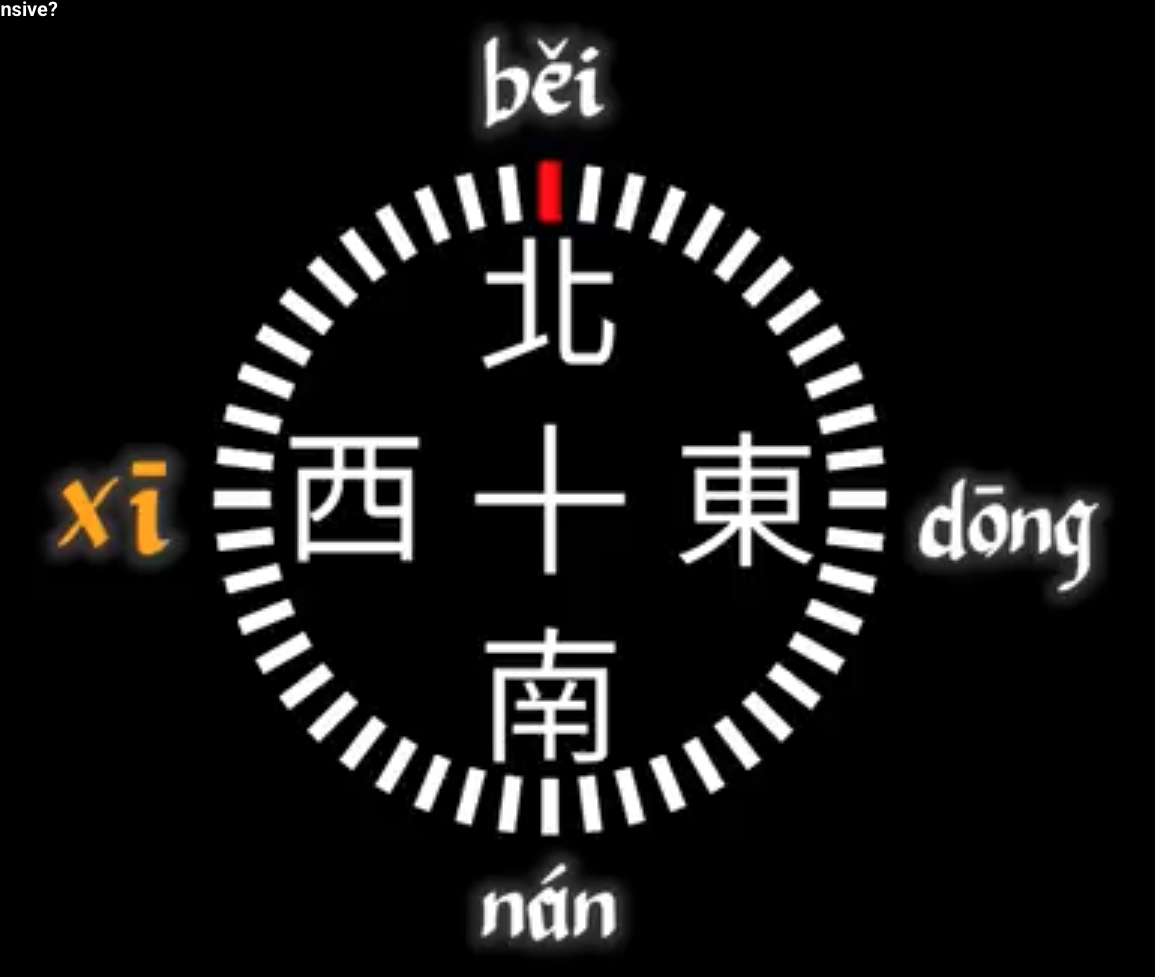 </a>
</a>
- Person 00:18 Person [人,亻]
-
<a target=”_blank” href=”https://www.youtube.com/watch?v=Wg9fNbRqWck&t=01h03m38s Woman [女]</a>
- <a target=”_blank” href=”https://www.youtube.com/watch?v=Wg9fNbRqWck&t=16m19s Mouth [口]</a>
-
<a target=”_blank” href=”https://www.youtube.com/watch?v=Wg9fNbRqWck&t=46m06s Speech [言,讠]</a>
- <a target=”_blank” href=”https://www.youtube.com/watch?v=Wg9fNbRqWck&t=01h36m21s Hand [手,扌]</a>
- <a target=”_blank” href=”https://www.youtube.com/watch?v=Wg9fNbRqWck&t=01h53m11s Heart [心,忄]</a>
Elements:
- <a target=”_blank” href=”https://www.youtube.com/watch?v=Wg9fNbRqWck&t=02h27m01s Earth/Soil [土]</a>
- <a target=”_blank” href=”https://www.youtube.com/watch?v=Wg9fNbRqWck&t=01h19m44s Sun [日]</a>
-
<a target=”_blank” href=”https://www.youtube.com/watch?v=Wg9fNbRqWck&t=31m14s Water [水,氵]</a> Get the $5 Companion
- <a target=”_blank” href=”https://www.youtube.com/watch?v=Wg9fNbRqWck&t=02h09m54s Tree/Wood [木]</a>
Similarly:
- https://www.youtube.com/watch?v=mXxYIuUAFkY
- 5 Patterns That Unlock 75% of Chinese Words
- https://www.youtube.com/watch?v=lKAkMvxTKkg by 100Chinese
- https://www.youtube.com/watch?v=hcRnPnMp_D0 32:06 “11 Patterns Unlock Natural Chinese” Canto to Mando
https://fanyi.baidu.com/mtpe-individual/transText#/zh/en/
https://soundcloud.com/user-682871665/sets/hsk-1-textbook-audio
https://languageplayer.io/en/zh/reader/ Tap on any word for a popup dictionary.
214 radicals were in the original Kangxi list that got simplified.
Elements 素 sù
The five elements:
VIDEO:
Chinese Periodic Table of Elements: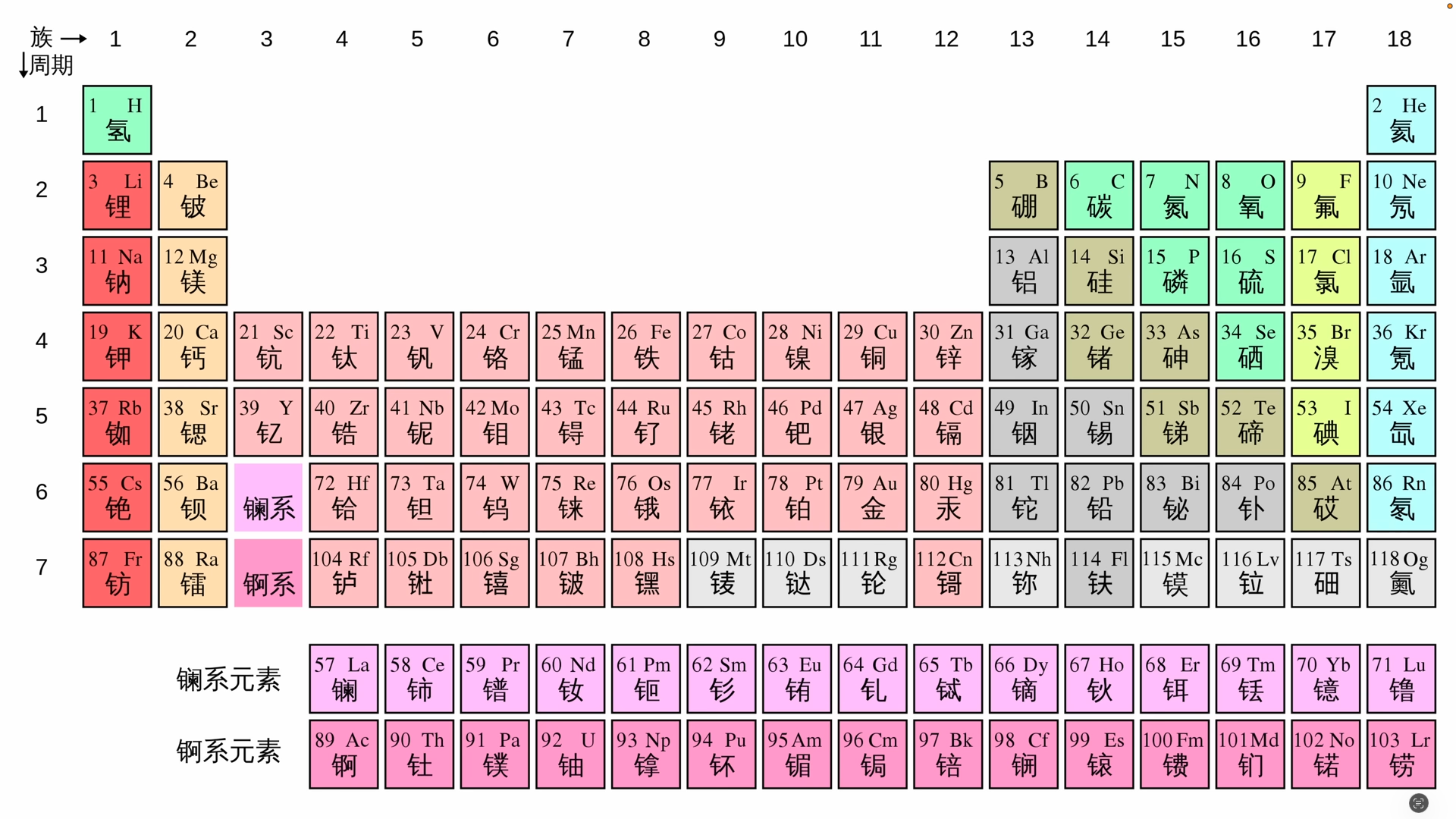 Does not use many phonetically borrowed words.
- air/gas 气体 Qìtǐ, radical yáng = oxygen
- water/liquids 液体 Yètǐ
- metal 金属 Jīnshǔ, Radical: jiǎ
- stone 石头 Shítou
- fire 火 Huǒ (anger, temper)
- bamboo
Celestials
- Sky
- Star
Colors 颜色 yánsè
In imperial courts, only the emporer can wear yellow and eat from yellow plates.
Color words are generally formed by taking the color name and adding the character 色 (sè), which means “color” or “look”.
- Black 黑色 hēisè
- White 白色 báisè is the color of death, worn at funerals
-
Gray 灰色 huīsè
- Pink 粉色 / 粉红色 fěnsè / fěnhóngsè
- Red 红色 hóngsè
- Green 绿色 lǜsè
-
Blue 蓝色 lánsè
- Brown 棕色 / 咖啡色 zōngsè / kāfēisè
- Orange 橙色 / 橘色 chéngsè / júsè
- Yellow 黄色 huángsè
-
Purple 紫色 zǐsè
- Gold 金色 jīnsè
- Silver 银色 yínsè
Cultural Norms & Mores Taboos
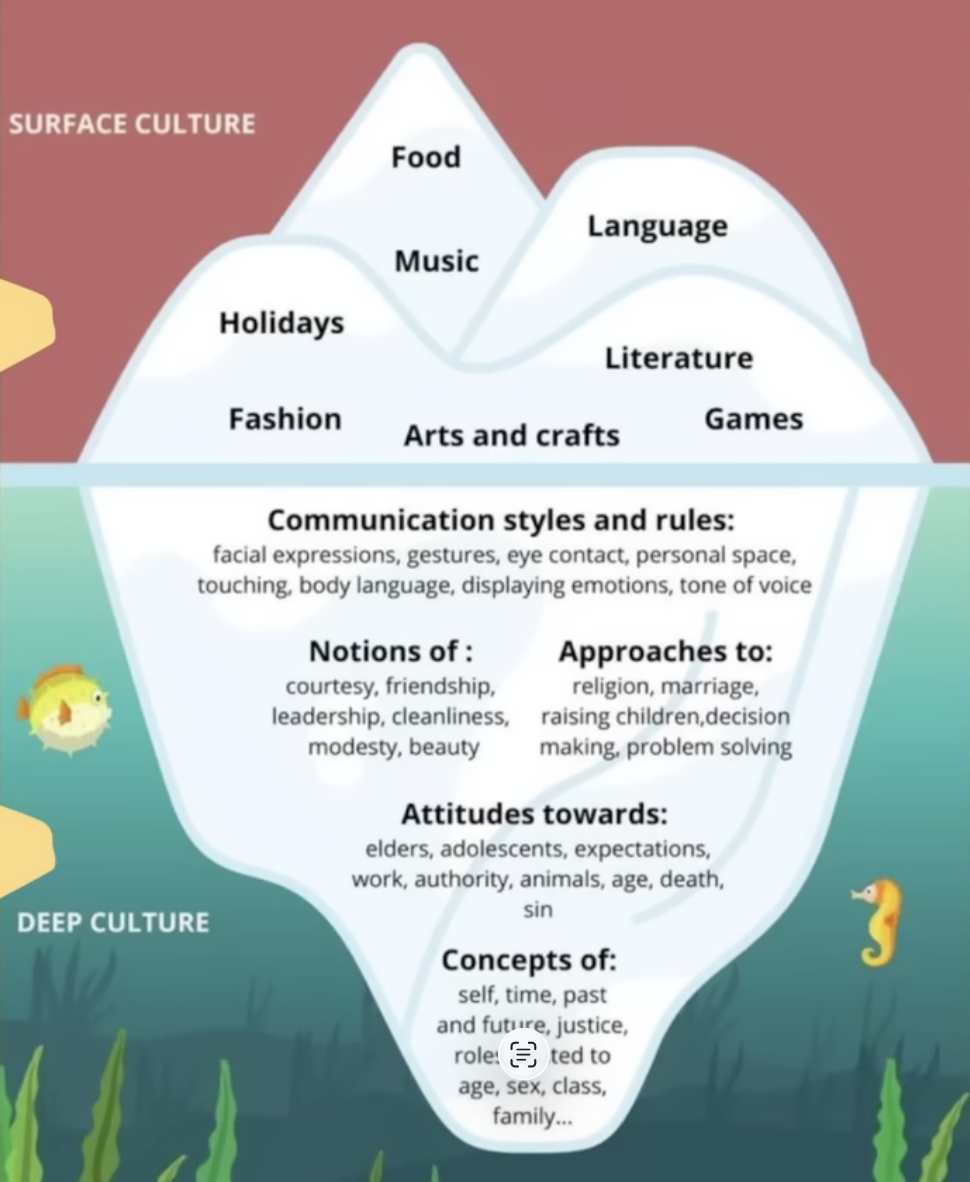
Respect for the elderly: The word 老 lǎo = old is part of the word for teacher 老师 lǎoshī, lǎobǎn = boss, Lǎozǐ (the founder of Taoism and author of dào dé jīng), and lǎo 朋友 pěngyǒu = old friend. 外国人 Wàiguó rén
Ancestor worship: many setup shrines to ancestors in their home, and bow 3 times every morning in front of it.
The first British ambassador to China (Macartney) refused to bow to the Chinese emporor (1793-94), the compromise is that he take a knee.
Many Chinese believe in luck. There are Feng Sui professionals who advise on placement of furniture and even entire buildings.
- The number 4 is avoided because its pronouciation is similar to the word for “death”. That’s why many buildings don’t have floor 4, 14, 24, etc.
- The number 8 is favored because its pronouciation is similar to the word for “fortune”. That’s why phone numbers containing 8’s sell for millions. The 2008 Olympics in Beijing began on Aug 8 at 8:08:08.
When buying gifts, avoid homophones:
- clocks (sounds like sòng zhōng - to attend someone’s final moments)
- pears (sounds like “leaving”)
- umbrella (“separting”)
- shoes xìe “evil”
- knives
- umbrella “to separate”
- pears “separation”
- green hats
Press:
- The Xinhua News Agency is the official voice of China.
- South China Morning Post
12:49 10 Things NOT to do in China” by Maggie Ye
- lubobo dolls
- shānzhai = knockoff product
- xiaohungshu = social media app
Etiquette
https://www.youtube.com/watch?v=XDClJwGDkFk&pp=ugUEEgJlbg%3D%3D Dos and Don’ts of Chinese Etiquette: Things You Should NEVER Do According to Chinese Tradition!
https://www.youtube.com/watch?v=IUbAoYnCqa4&pp=ugUHEgVlbi1VUw%3D%3D 6:38 How to Eat With Chopsticks? [Learn effectively once and for all!] Somebody Asked
Foods
-
吃 chī to eat
- 用餐 yòngcān to eat a meal
- 早餐 zǎocān breakfast
- 午餐 wǔcān lunch
- Teatime
- 晚餐 wǎncān dinner
-
Snack 小吃 xiǎo chī
- 客房服务 kèfáng fúwù room service
- 去 qù to go
- 餐厅 cāntīng = canteen/restaurant
-
自助餐 zìzhùcān buffet
- 食物 shíwù food
- 菜 cài vegetable / dish / cuisine
-
饭 fàn cooked rice / food / meal
- 饮料 yǐnliào drink / beverage
- 水 shuǐ water
- 红茶 hóngchá black tea
- 绿茶 lǜchá green tea
- 奶茶 nǎichá milk tea
- 果汁 guǒzhī juice
- 咖啡 kāfēi coffee
-
冰 bīng ice / cold
- Restaurant 餐馆 Cānguǎn
- 肉类 Ròu lèi = Meats
- 鱼 Yú = Fish
- 牛 niú cow / ox
- 牛肉 Niúròu = Beef meat
- 猪肉 Zhūròu = Pork meat
- 牛肉面 niúròumiàn beef noodle
- 鸡 Jī = Chicken
- 鸭子 Yāzǐ = Duck
- 鲔鱼 wěiyú tuna
-
起司 qǐsī cheese
-
面包 Miànbāo = Bread
- wǎn3 碗 碗 BOWL
- pánzi 盤子 盘子 PLATE
- tāngchí 湯匙 汤匙 SPOON
- chāzi 叉子 叉子 FORK
-
kuàizi 筷子 筷子 CHOPSTICKS VIDEO
- 非常好 Fēicháng hǎo Very good
- I’m very full 我吃得很饱。Wǒ chī dé hěn bǎo.
References:
- https://www.youtube.com/watch?v=MGviovQe7-s = How Famine Created Modern Chinese Food by Taste of Nations
- https://www.youtube.com/watch?v=adMkWIW6yQE Hongmen Banquet : This Shocked Me!
- https://www.youtube.com/watch?v=5cRY6MENRZI&pp=ugUEEgJlbtIHCQkTDAGHKiGM7w%3D%3D Xu Yan Shanghai Chinese banquet
- Legacy of China’s Imperial Cuisine and the Role of Food in Imperial Court Etiquette
Movies
- stream: “The Empress of China (2014)” 武媚娘传奇 (Wǔ Mèiniáng Chuánqí), about Tan dynasty Wu Zetian. Orginally 96 episodes, censors cropped out scenes and reduce to 86 on YouTube</a> Ren Cai Wu Ru Yi Ru Gong
- Shaolin Temple (1985)
- The Qin Empire III (2017)
- Hero (2002)
- King’s War (2012)
- Ming Dynasty in 1556 (2007)
- Legends of War TRT Documentary
- The Emperor in Han Dynasty (2005)
- Mongol (2007)
- Red Cliff (2008)
- Eight Hundred Heroes (1976)
- The Eight Hundred (2020)
- Three Kingdoms (2010)
Films
For Chinese-language films with English subtitles in the U.S., these are the most useful legal streaming options:
https://www.netflix.com/browse/genre/100375 Netflix Chinese-Language Movies & TV
https://www.youtube.com/watch?v=5zYOCMol08o Top 10 Best Chinese Movies of All Time on Netflix and YouTube : Mind-Blowing Chinese Movies
https://www.youtube.com/watch?v=JpgHdLHqhuw Top 10 Chinese Movies Every Cinephile Must See – Ranked
Criterion Channel — best for major auteurs and film-history picks, including Jia Zhangke and Hong Kong/Taiwanese cinema. It is available in the U.S.; use its country and director filters to find current titles.
AsianCrush — a focused Asian-film service with Chinese films and dramas, available through web, Roku, Android, and iOS. Its catalog includes titles such as Better Days.
Netflix — browse its dedicated Chinese Movies & TV category; subtitle/audio availability is title-specific, so open a film’s details before starting.
Well Go USA — a leading U.S. distributor for contemporary Chinese and other Asian films. Its Chinese-language catalog points to rental/purchase options such as Apple TV, Google Play, and YouTube.
iQIYI International / Viki / YouTube — often strongest for recent mainland Chinese dramas and some films; look for the “English subtitles” label and confirm your U.S. region before committing.
For more serious cinema, start with Jia Zhangke on Criterion. For modern, accessible drama, try Better Days on AsianCrush. Availability and subtitle tracks rotate, so search the exact title on the service before subscribing or renting.
https://www.youtube.com/watch?v=96i2RzaDEIk 15:42 China’s ENTIRE Three Kingdoms Story in ONE Video 235K views
Chinese Art
https://www.youtube.com/watch?v=ZfxftB37c5E 22:56 I Investigated Shen Yun’s HQ, Here’s What I Found… https://www.shenyun.com USE CODE: LCN2026 New York Times hit pieces Falun Gong/Dafa https://www.youtube.com/watch?v=StL8HFFB7Bk
14:18 China’s 5 Greatest Artworks Explained in One Video
- 00:34 - Terracotta Army
- 02:12 - Admonitions of the Court Instructress 292 AD
- 05:27 - Mogao Caves 366 AD - 1400 AD Buddist along the Silk Road
- 06:53 - The Preface to the Orchid Pavilion Gathering 37 poems Running Script caligraphy by Lantingji Xu 353 AD - Drinking goblets
- 11:00 - The National Museum of China Palace Museum digitized their greatest treasures in ultra-high & 3D video. “Along the River During the Qingming” (Qingming Shanghe Tu) tomb sweeping Festival from the 12th century Sung Dynasty is China’s “Mona Lisa”. In complete form of 15 feet is displayed for a few weeks every few years.
Top 5 Greatest Paintings in Chinese History
-
At the National Museum of China, Beijing VIDEO: the Houmuwu Ding (Simuwu Ding) bronze cauldron from the late Shang Dynasty (c. 1300–1046 BC) weighs 832 kg (1,835 lbs) and features intricate taotie (animal mask) motifs.
-
At Hebei Museum, Shijiazhuang is the Jade Burial Suit of Prince Liu Sheng of the Western Han Dynasty (113 BC) - a full-body suit made of 2,498 pieces of green jade sewn together with gold wire.
-
At the Shanghai Museum, “Five Great Kilns” of the Song era created at the peak of minimalist ceramic aesthetics.
-
At the Palace Museum (Forbidden City) *and
Smalltalk
https://singandlearnchinese.com/ytvs-chuang-qian
https://singandlearnchinese.com/ytvs-yi-xiao-bu
Describe Yourself in Chinese 自我介绍
https://www.youtube.com/watch?v=fpwviShEmbc 27:59 The Truth about Chinese Fluency by Cheer Up Chinese
Questions to answer
- What is your name?
- What is your nationality?
- How long have you been studying?
- [1:00] Close enough
- [1:10] OK, let’s go.
- [1:23] I think so.
People words in Daily Interactions
- zǒng = chief (department head)
https://quizlet.com/254931199/mandarin-chinese-flash-cards/#
- 大家 dàjiā = everyone
PROTIP: Before registering, pick a Chinese name based on phonetics and meaning you desire and can remember. Get a chock stamp made.
by Chinese gossip:
- https://www.youtube.com/@GossipChinese/videos
- https://www.youtube.com/watch?v=WVuaXU-n07Y I built a Chinese learning escape room game😲
- https://www.youtube.com/watch?v=OR-obiEEm7E ordering food
25:34 China Travel Guide 2026: Alipay, 12306, Visa-Free & eSIM (Step-by-Step)
https://www.youtube.com/watch?v=Fu8F_XJyIkI The BEST Way to Master Chinese Characters (Stop Memorizing!)
https://www.youtube.com/watch?v=IMXN8puYJoY Master 80% of Daily Chinese in ONE Video! (HSK 1-2)
https://www.youtube.com/watch?v=WVuaXU-n07Y&pp=0gcJCckLAYcqIYzv I built a Chinese learning escape room game😲
https://www.youtube.com/watch?v=JLkKnJ8QIGk Fun History You Must Know Before Learning Chinese
https://www.youtube.com/watch?v=0PxWmJ2Fzss How to Learn Chinese in a Fun Way
https://www.youtube.com/watch?v=027MgCvbWkg Learn Chinese Through Animation : Introduce Yourself(HSK1) https://www.youtube.com/watch?v=Gh3cxOYjjQ8&pp=0gcJCckLAYcqIYzv Chinese Daily Podcast : Describe Yourself in Chinese : 自我介绍 : Slow Chinese Podcast : HSK1–HSK2 Speak Chinese With Me
https://www.youtube.com/watch?v=fOqtcqib_BA Learn Chinese Through Animation : Make Weekend Plans (HSK1-2)
https://www.youtube.com/watch?v=9RmY4JNDWaQ Learn Chinese Through Animation : Shopping & Bargaining (HSK 1,2)
https://www.youtube.com/watch?v=I06FqEflKZE Learn Chinese Through Animation : Travel to the Forbidden City(HSK1-2)
https://www.youtube.com/watch?v=vjfcJPjPfeY make new friends
https://www.youtube.com/watch?v=AyUxomg5Oeo The Super Common Chinese Number “一”: 3 Tones, Which One to Use?
https://www.youtube.com/watch?v=–rgWETNGmg The 11 “Easy” Sounds That Are Ruining Your Chinese Accent
best apps
https://www.youtube.com/watch?v=_w7sK2GYw54
Preply use 1:1 platform (50% off): http://preply.sjv.io/nXKmex
https://www.youtube.com/watch?v=xQXiSGDXknA How to Actually Use AI for Language Learning (LLMs The Expert Way) @languagejones pushes https://learn.lingopie.com/languagejones using LLM with personalized TV & movie clips
online dictionary to click the speaker icon to hear a native pronunciation: (e.g., Pleco, Translate.Google.com, or YouGlish)
cantotomando masterclass copy & Paste method https://docs.google.com/document/d/19zAyAVcxxOLqVGwroq9epccT_PcwYVzT24JHTOrZ0SM/edit?pli=1&tab=t.0#heading=h.dmj2tkm6pce1
- To build vocabulary:
-
On a web browser, 100 Mandarin Words and Phrases Beginners Must Master
-
Anki: https://apps.ankiweb.net/
-
For free language exchange:
- HelloTalk is free
- VIDEO: italki pay per lesson code: julesy3
Once you have some fluency:
- Install Glossika, an audio flashcard app.
Apps for Daily Progress:
-
Language Transfer: https://www.languagetransfer.org/ free
-
$20.95/mo. Pimsleur app (7 days free): http://imp.i271380.net/BrianWiles $165/yr conversations. Learn while you drive, run, or garden.
For Building Reading Skills:
- (Mandarin) TCB: https://www.thechairmansbao.com/ news-based articles $11/month
- (Multi-language) BeeLingua: https://beelinguapp.com/ Premium subscribers can get rid of ads https://www.youtube.com/watch?v=4NlSwUzqAcU&pp=ugUHEgVlbi1HQg%3D%3D
- (Japanese) Satori Reader: https://www.satorireader.com/
Topics:
- Arts, Culture & Expression 🎨
- Science, Nature & Exploration 🔬
- History, Society & Traditions 🏛️
- Education, Learning & Personal Development 📚✨
- Literature & Storytelling 📖📝
- Leisure, Entertainment & Hobbies 🎮🎭
- Identity, Relationships & Emotions 🧠❤️
- Phrases and Conversations 📢🗣️
Language exchange Don’t use tap-and-match boring Rosetta stone Duolingo Drops Jumpspeak
https://www.youtube.com/watch?v=mXxYIuUAFkY How Are Chinese Characters Formed? : 3 Major Types Explained Everyday Hanzi
https://www.youtube.com/watch?v=ZemMzFxYIG4 Learn All the Basics of Chinese Writing Part 1 - Strokes : How to Write Chinese Characters (Hanzi) Janus Academy - Learn Chinese & Japanese
https://www.youtube.com/watch?v=MwwTfcYFhLI How I learned Mandarin Chinese in 6 months self-taught at home 4-6 hrs/day Dr. Izzy Sealey
https://www.youtube.com/watch?v=c0uMvFqXqVk 7:41 Numbers 0–10 & Days of the Week : Chinese for Beginners Mandarin with Phoebe
idioms (成语, chéngyǔ)
- 突发奇想 - tūfā qí xiǎng = To suddenly be inspired to do something
- 丰富多彩 - fēng fù duō cǎi = Richly colorful.
- 争先恐后 - zhēngxiānkǒnghòu = Striving to be first and fearing to
- 与日俱增 - yǔrìjùzēng = To increase steadily / to grow with each passing day.
- 引人注目 - yǐnrénzhùmù = To attract attention / eye-catching / conspicuous.
- 翻山越岭 - fānshānyuèlǐng = To pass over mountains ridges / fig the hardships of the journey.
- 脱颖而出 - tuōyǐng’érchū = To reveal one’s talent / to rise above others / to distinguish oneself.
- 超凡脱俗 - chāo fántuō sú = To stand out as extraordinary.
- 如火如荼 - rúhuǒrútú = Like wildfire / unstoppable.
- 一举两得 - yī jǔ liǎng dé = One move, two gains / two birds with one stone.
- 迫在眉睫 - pòzàiméijié = lit. Pressing in on one’s eyelashes / fig. Imminent.
- 座无虚席 - zuòwúxūxí = lit. A banquet with no empty seats / full house / capacity crowd / standing room only.
- 愚公移山 - yúgōngyíshān = The old man moves mountains / fig. Where there’s a will, there’s a way.
- 记忆犹新 - jìyìyóuxīn = To remain fresh in one’s memory.
- 世外桃源 - shìwàitáoyuán = Peach Blossom Spring / a hidden land of peace and prosperity / utopia / paradise.
- 应运而生 - yìngyùnérshēng = lit. To emerge to meet a historic destiny / fig. To arise at an opportune time / able to take advantage of an opportunity / to rise to the occasion.
- 活到老,学到老 - huódàolǎo, xuédàolǎo = One is never too old to learn.
- 翻天覆地 - fāntiānfùdì = lit. Sky and the earth turning upside down / fig. Complete confusion / everything turned on its head.
- 大街小巷 - dàjiēxiǎoxiàng = lit. Great streets and small alleys / fig. Everywhere in the city.
- 能歌善舞 - nénggēshànwǔ = lit. Can sing and dance / fig. A person of many talents.
- 天上掉馅饼 - tiānshang diào xiànbǐng = lit. A pie in the sky / fig. A free lunch.
- 天有不测风云 - tiānyǒubùcèfēngyún = lit. A storm may arise from a clear sky / fig. Something unexpected may happen any time.
- 靠山吃山,靠水吃水 - kàoshānchīshān, kàoshuǐchīshuǐ = lit. Those living on a mountain live off the mountain, those living near the water live off the water / fig. To make living with the local advantages.
- 车水马龙 - chēshuǐmǎlóng = lit. Endless stream of horse and carriages / fig. Heavy traffic.
-
如鱼得水 - rúyúdéshuǐ = lit. Glad to. fig. Like a fish back in water
-
完璧归赵 - Wan Bi Gui Zhao = Lit. Returning the jade intact to Zheo refers to cunning recovery skill. This idiom comes from a famous story during the Warring States period, recorded in the historical text Records of the Grand Historian (史记). A precious and highly coveted jade disk, the “He Shi Bi” (和氏璧), was owned by the State of Zhao. The powerful King of Qin offered to trade 15 cities for it. Fearing the king’s military might, Zhao sent the clever diplomat Lin Xiangru (蔺相如) with the jade. Lin realized that the King of Qin had no real intention of giving up the cities, so he used his wits to reclaim the jade and safely return it to Zhao, preventing a major diplomatic loss. – China.org.cn
-
灰犀牛 Huī xīniú “grey rhino” is a meme for a danger that’s huge, obvious, and charging strait at you.
- https://www.youtube.com/watch?v=EwoF1E8ed5k = slang www.youtube.com/@valerie_chinese
Fluent Forever
https://www.youtube.com/watch?v=jC-0KNtkCkE
https://www.youtube.com/watch?v=OxfKGlb2pFg How to Start Writing Chinese Characters (Step by Step) Grace Mandarin Chinese
Dog breeds from China
Story of China’s most beautiful woman: https://youtu.be/_GG0meN-OQM
https://www.youtube.com/watch?v=4UYkiXT-lQ0 8:02 How to Easily Remember Chinese Characters (Without Memorizing Thousands!) mifi Chinese
Tones Sandhi
PROTIP: Unlike European languages, one cannot ask a question by turning the end of sentences into a question using rising intonation. Tone 2
TODO: Use https://www.archchinese.com/mandarin_chinese_tone_drill.html to practice Mandarin tone change rules:
-
When a 3rd tone is followed by another 3rd tone, the first one becomes a 2nd tone. For example, 你好(nǐhǎo => níhǎo).
-
When the character 一(one), which is a 1st tone by itself, is followed by a 1st, 2nd, or 3rd tone, it becomes a 4th tone. For example, 一些(yīxiē => yìxiē).
-
When the character 一(one), which is 1st tone by itself, is followed by a 4th tone, it becomes a 2nd tone. For example, 一半(yībàn => yíbàn).
-
When the character 不(no,not), which is a 4th tone by itself, is followed by another 4th tone, it becomes a 2nd tone. For example, 不要(bùyào => búyào).
https://www.youtube.com/watch?v=ATtAHQQKBas How to MASTER the Tones of Mandarin Chinese Learn Chinese Now
https://www.youtube.com/watch?v=xTc_VlEV3yY t’s Not Just Tones: Chinese ALSO Has Intonation (why robots don’t sound natural) Julesy
https://www.youtube.com/watch?v=ATtAHQQKBas How to MASTER the Tones of Mandarin Chinese by Learn Chinese Now
https://www.youtube.com/watch?v=eIP8yVcDZRI The SECRET to Perfect Mandarin Tone Pronunciation 🇨🇳
https://www.youtube.com/watch?v=ikBI9pk84EE (Pt 2)The SECRET to Perfect Mandarin Tone Pronunciation
https://www.youtube.com/watch?v=4ZY8rzG0x5I 7:45 Are You Pronouncing the Third Tone Correctly?/Tone3 combination/Mandarin pronunciation Basics#4 Chinese with Fang and Bright
https://www.youtube.com/watch?v=_rkKJg9gRK0 10:55 Can’t Hear Chinese Tones? Here’s the Method You’ve Been Missing! Lala Chinese 啦啦的中文课
https://www.youtube.com/watch?v=tMQQoNbjUas&pp=ugUEEgJlbg%3D%3D Why Do Chinese Words All Sound the SAME?! Mandarin Blueprint
https://www.youtube.com/watch?v=OewzOCvDYjg 6:01 Don’t Memorize Chinese Tones - Train Your Ears Instead! ShuoshuoChinese说说中文
https://www.youtube.com/watch?v=Fu8F_XJyIkI 8:41 The BEST Way to Master Chinese Characters (Stop Memorizing!) Gossip Chinese
Brian Wiles
- https://www.youtube.com/watch?v=WyehfFj72zY&pp=ugUEEgJlbg%3D%3D = 11:49 How to Learn Chinese (Mandarin) On Your Own for FREE
- https://www.youtube.com/watch?v=tW3j0TP5N7A = Learn The Chinese Characters 人 大 天 夫 : CC01 : Learn to Read and Write Chinese Characters
by AhHanzi
- https://www.youtube.com/watch?v=Fu8F_XJyIkI 8:41 The BEST Way to Master Chinese Characters (Stop Memorizing!)
by Learn Chinese Now
- https://www.youtube.com/watch?v=dGBuXn6G0js 11:23 The Forgotten Legend Behind Every Chinese Character
by Jared Tells Tales
References to add
https://www.youtube.com/watch?v=S-ugOMdynYo&pp=ugUEEgJlbg%3D%3D 19:49 Why Speaking “Broken” Chinese Is The Fastest Path to Fluency Canto to Mando
https://www.youtube.com/watch?v=Uf8luHnpVS4 Kung Fu Panda